Yeshiva
Beit Midrash
- Sections
- Peninei Halakha
- Shabbat and Holidays
- Laws of Hanukkah
- Peninei Halkha - Hanukkah

The Sages prescribed that we recite two berakhot before lighting the Ĥanuka candles, so that we focus on the two aspects of the mitzva. The first berakha relates to the mitzva itself: "…Who has sanctified us with His mitzvot and commanded us to light Ĥanuka candles." The Ashkenazic formulation of this berakha concludes, "lehadlik ner shel Ĥanuka," while Sephardim conclude, "lehadlik ner Ĥanuka."3 The second berakha expresses our thanks to God for the miracles He performed on behalf of our ancestors when the story of Ĥanuka took place. The Sages enacted that we recite this berakha when we light the candles because the candles are supposed to remind us of the miracles and their meaning. We recite: "Barukh ata Hashem Elokeinu Melekh ha-olam she-asa nisim la-avoteinu ba-yamim ha-hem ba-zeman ha-zeh" ("Blessed are You, Lord our God, King of the universe, Who performed miracles for our ancestors in those days, at this time"). On the first day, we add the berakha of She-heĥeyanu, which expresses our thanks to God for giving us life and sustaining us for another year, giving us the privilege to once again reach the days of Ĥanuka and fulfill the mitzva of lighting the candles.4
Immediately following the berakhot, one begins lighting the candles, without talking between completing the berakhot and beginning to light. After the first candle is lit, it is customary to start reciting Ha-nerot Halalu (whose origin is Sofrim 20:6). While reciting this paragraph, one continues lighting the remaining candles. Even though more candles still need to be lit, reciting Ha-nerot Halalu does not constitute an interruption. As we already learned, the minimal obligation of the mitzva is fulfilled by lighting the first candle, while the purpose of the remaining candles is to beautify the mitzva. Even though, le-khatĥila, one should refrain from speaking until after all the candles are lit, since Ha-nerot Halalu explains the purpose of the mitzva, there is room to say that one should recite it specifically while fulfilling the mitzva. However, one who finds it difficult to recite Ha-nerot Halalu while lighting the candles may recite it afterward (see mb 676:8, Mishbetzot Zahav 676:5).
Some people also recite Le-shem Yiĥud prior to the berakhot and Ha-nerot Halalu, in order to perform the mitzva more intently.
One should light each candle well and wait until the flame takes firm hold onto the majority of the wick, not like those who rush to move onto the next candle before the previous one is properly lit (bhl 673:2, s.v. "hadlaka").
The text of the Gemara (Shabbat 23a) reads, "lehadlik ner shel Ĥanuka," and this is how Rif and most Rishonim formulate the berakha. Ashkenazic custom follows this opinion, as mb 676:1 states. On the other hand, sa 676:1 states, "lehadlik ner Ĥanuka," and Arizal and the Vilna Gaon concur. Sephardic Jews follow this custom.↩︎
Some maintain that the berakhot of She-asa Nisim and She-heĥeyanu were instituted in connection with both the act of lighting the candles and with the day itself. Therefore, one who cannot light candles nonetheless recites these berakhot upon the day itself (Me’iri). Others maintain that these berakhot were instituted only in connection with the lighting, and one who does not light or see lit candles may not recite them (Rambam). The Aĥaronim debate this issue as well, and sht 676:3 remains undecided. According to most Aĥaronim, however, one should not recite the berakhot, out of uncertainty.↩︎
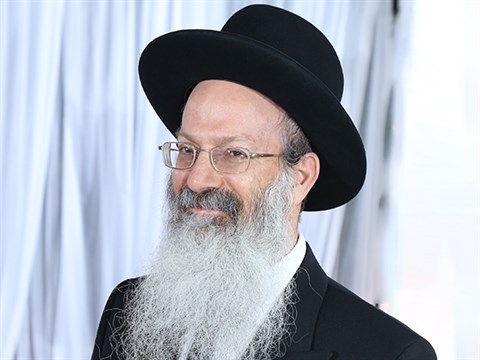
Rabbi Eliezer Melamed

Peninei Halakha 18. Torah Verses in the Prayers and in the Berakha of She-asa Li Kol Tzorki
Chapter 10: The Laws of Tisha Be-Av






Rabbis in Midrash
































Various Events FOR WHOM NOT TO VOTE
Rav Zvi Yehuda Kook stressed that Israeli politics is G-dly, so I have no problem answering this common question on a Torani blog. Also, Free-Will is a G-d-given right and obligation, to "destine one's fate" (R. Soloveichik, Kol Dodi Dofek, 67), so I obviously don't tell others how to vote. But once not a few (especially young) have already asked, a couple of personal words from experience and thoughts from chazal & Rav Kook which may be of help to others, mainly for whom NOT to vote.

P'ninat Mishpat Fallout from Failure to Install Elevator – part II
based on ruling 85007 of the Eretz Hemdah-Gazit Rabbinical Courts








