Yeshiva
Beit Midrash
- Sections
- Peninei Halakha
- Shabbat and Holidays
- Laws of Hanukkah
- Peninei Halkha - Hanukkah

There are different traditions regarding how to fulfill the custom of mehadrin min ha-mehadrin in practice. According to Sephardic tradition, the main way of beautifying the mitzva is to light the number of candles that corresponds to the current day of Ĥanuka. Even if there are many people living in one home, only one of them should light Ĥanuka candles, and he should light the number of candles that corresponds to the current day of the holiday. That is, he lights one candle on the first night, two on the second, and eight on the eighth. The reason for this is that the goal of the custom is to show how many days the miracle lasted, as this publicizes the miracle more. If everyone in the house were to light candles within the small space adjacent to the doorway, passersby would not be able to recognize which day it is, because everyone’s candles would appear conjoined and confuse the tally. Since according to this custom only one person lights, it is proper for the head of the household to light on behalf of everyone else.
If the children ask to light candles, their parents may let them light their own Ĥanuka candles, as long as they are careful to create a separation between each individual menora. According to the custom of most Sephardim, children who light Ĥanuka candles do not recite a berakha, but R. Mordechai Eliyahu ruled that children under the age of bar mitzva may recite a berakha. R. Shalom Messas ruled that if someone over the age of bar mitzva wants to recite a berakha, he should have in mind not to fulfill his obligation through his father’s lighting and may then beautify the mitzva by lighting the candles with a berakha (Yalkut Shemesh, oĥ 192).
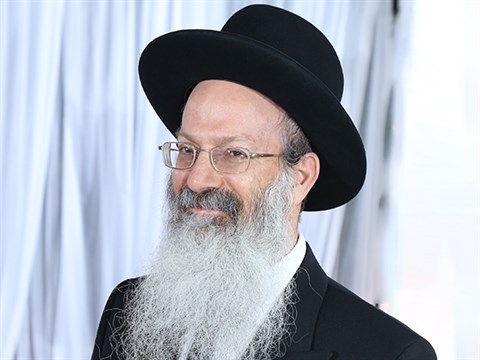
Rabbi Eliezer Melamed

Peninei Halakha 18. Torah Verses in the Prayers and in the Berakha of She-asa Li Kol Tzorki
Chapter 10: The Laws of Tisha Be-Av
Peninei Halakha 5. Tzom Gedalia
Chapter 6: The Four Fasts Commemorating the Destruction of the Temple






Rabbis in Midrash

































Various Events FOR WHOM NOT TO VOTE
Rav Zvi Yehuda Kook stressed that Israeli politics is G-dly, so I have no problem answering this common question on a Torani blog. Also, Free-Will is a G-d-given right and obligation, to "destine one's fate" (R. Soloveichik, Kol Dodi Dofek, 67), so I obviously don't tell others how to vote. But once not a few (especially young) have already asked, a couple of personal words from experience and thoughts from chazal & Rav Kook which may be of help to others, mainly for whom NOT to vote.

P'ninat Mishpat Fallout from Failure to Install Elevator – part II
based on ruling 85007 of the Eretz Hemdah-Gazit Rabbinical Courts








