Yeshiva
Beit Midrash
- Torah Portion and Tanach
- D'varim
- Ekev

Most commentators interpret the word to mean a causative issue. It indicates that because a person does or does not do certain actions and behaviors, immense consequences flow from that seemingly unimportant decision. We are all aware that the Torah views the events of personal and national life to be one of cause and effect. Nothing happens in a vacuum or at random and it is human behavior that sets the stage for all later events, even events that will occur centuries or millennia down the line. This lends importance to every act or omission of an act that a human being performs. And thus, the interpretation of Rashi falls in line with the general interpretation of the word Ekev.
We are being taught that there is nothing in life that should be considered completely unworthy of contemplation. Every situation, no matter how minor we may deem it to be, or inconsequential is a matter of importance and contains within it ramifications that we are unaware of but are present.
The course of life is always mysterious, surprising, unexpected, and basically inexplicable. No one in our world today would have expected it to look the way it does just six months ago. We had all made plans for our immediate and long-range future. All those plans have been dashed by the dreaded coronavirus and its consequences. And yet, as we stand dazed and confused by what has struck us, deep down we are aware that there is a cause that has activated this situation. I am not speaking about an immediate direct cause – the escape of the virus from the Wuhan Chinese laboratory.
That is only a superficial cause that answers little and explains even less.
Rather, there is a deep-seated cause within human society of the early 21st century that has provoked this reaction to the behavior, agendas and thought processes of modern civilization. If the cause is to be searched for in our attitudes and behavior, then that requires contemplation and rational thought instead of preconceived utopian ideas. It requires a sense of humility and a return to the basic values of human life as represented to us by the Torah and taught to us by Moshe our revered teacher
Human civilization needs a little less hubris, less arrogance, more minimal expectations of life, and a realization that even though man may have many great ideas, it is the will of the Lord so to speak that will eventually prevail one way or another.
Shabbat shalom
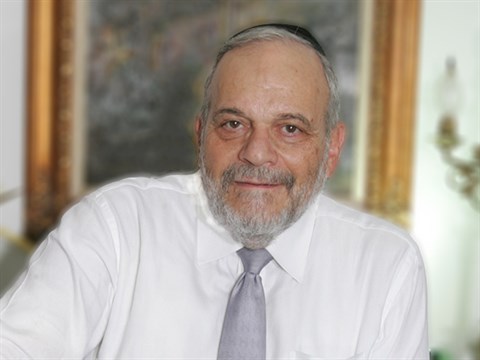
Rabbi Berel wein







Rabbis in Midrash























Lessons
fast navigation










Hosha'ana Rabba FLYDUBAI & HOSHANA RABBA- ANI VAHU HOSHIA NA- I & HIM SAVE US
"Ani vaHu Hoshia Na", "I and Him, Save Us". We don't just pray to Him, but we also pray to and for ourselves that we should emulate and educate our children to have that instinctive altruism with which He created the world. President Trump seemed amused about Yaniv Hayon, our PLUMBER who confidently worked with G-d like Superman (he learned from a pilot on a TV show!) to save 174 lives on the Dubai hijacking, but we in Israel are totally accustomed already 78 years to our plumbers, teachers, garbage-men, rabbis, farmers & doctors being Hashem's shlichim! This is what Zionism is about.
Moreshet Shaul Hashem Is your Shadow – part I
Based on Siach Shaul, Pirkei Machshava V’Hadracha p. 420 – an address from 1941










