YeshivaThe torah world Gateway
Beit Midrash
- Torah Portion and Tanach
- Shmot
- Bo

Then, just a bit later, Moshe tells Paro in no uncertain terms: "With our youngsters, & our elders, we shall depart; we shall go with our sons & with our daughters."
The end of our Parsha digresses a bit from the Exodus narrative to list the Halachot of the Pidyon Ha-Ben, the Redemption of the First-Born (of both humans & animals). Though this Mitzva connects to the fact that the Hebrew 1st-born
were saved in the last plague, & initially were the ones who administered the service in the Mishkan, the Torah’s overriding rationale for this ritual is, "When your child will ask you (at the Pesach Seder), ‘What is all this?’ you will answer him, ‘With a strong arm G-d took us out of Egypt."
The emphasis, it seems crystal-clear from all this, is squarely on ensuring that the younger generation steps up & takes its rightful place as the next link in the chain.
Today, sadly, we do not (yet) have a Bet HaMikdash, & so neither the first-born nor the Kohanim conduct the offerings. Nevertheless, we are careful to recognize the Kohanim among us, & we still maintain the ritual of the Pidyon Ha-Ben. But part of that ritual is quite perplexing. It includes a dialogue that is held between the father of the first-born boy, & a Kohen.
The Kohen asks the father: "What do you prefer: that you give your child to me (presumably to serve in the Bet HaMikdash), or that you redeem him with 5 silver coins?"
The father then answers, "I wish to redeem my son," & he hands the money to the Kohen.
Does this make any sense at all?! If the father chooses NOT to redeem his son, would the boy then "belong" to the Kohen? Where – how – would he serve? Why doesn’t the father just redeem his son, as the Torah prescribes,
without this seemingly superfluous conversation?
But here’s the point: The Kohen - as spiritual leader - is asking the father, as he is just beginning his family: "What are your priorities? What matters most to you in life – the kid, or the kesef?!"
Many fathers leave for work early, before the kids get up, & return late at night, when they are already asleep, hardly seeing their young children. Asked why they do this, they invariably say, "I’m doing it for my kids!" But our children need us – physically alongside them, hands-on, face-to-face.
As we leave Egypt & begin our eternal adventure as a nation, G-d asks us not to be enslaved by work or wealth, but to free ourselves to raise our family. That, undoubtedly, is our most "redeeming" quality.
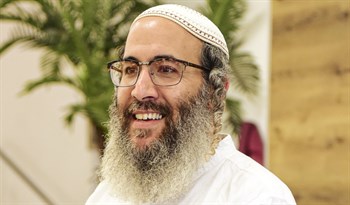
Rabbi Stewart Weiss
Was ordained at the Hebrew Theological College in Skokie, Illinois, and led congregations in Chicago and Dallas prior to making Aliyah in 1992. He directs the Jewish Outreach Center in Ra'anana, helping to facilitate the spiritual absorption of new olim.
Jewish Laws and Thoughts Shul “etiquette:” can we honor Hashem while respecting our fellow congregants?





Rabbis in Midrash















Lessons
fast navigation











Israel and the Nations A Few Minutes & Many Innovative Ideas on Antisemitism & What to do About It
As we approach the High Holidays, this short lecture (18 minutes) deals with the unfortunate situation of how Israel and the Jewish People stand against antisemitism, analyzing its cause according to Rav Kook, and how to deal with the issue pragmatically & via our prayers.
Ha'azinu PURSUIT is PERFECTION
p. Ha'azinu, Shabbat Shuva
Rav Kook deals with the question of the seemingly hopeless nature of Tshuva. For G-d Himself knows that He created us with free will, which inevitably means we will sometimes make mistakes and choose wrong. This can easily be frustrating, freezing us into inaction and ye'ush (loss of hope). If one sins even once, does he chalila have no choice but suicide?! Moreover, our Godly conscience demands justice, righteousness and perfection, but we all know this is impossible, so what's the solution? Rav Kook's innovative thinking, strongly based on chazal (our sages), offers an inciteful and important aspect to this topic, especially this time of year!

Sukkot Bug-Free Sukkah: Essential Halachic and Practical Schach Guide
How to inspect, clean, and store bamboo mats and palm branches to protect your mitzvah and holiday meals.