Yeshiva
Beit Midrash
- Torah Portion and Tanach
- Bamidbar
- Shlach Lecha

The Torah study is dedicatedin the memory of
R. Avraham ben-tziyon ben shabtai
We, living today in Eretz Yisrael, find ourselves in a period of crisis and struggle. Some have even noted that the present situation - in which our rights to the Land of Israel are being challenged - bears a striking resemblance to the time of the meraglim (spies). It does not take much insight to say that today, God is providing us with a test to enable us to rectify that fateful error. It therefore behooves us to contemplate the deeper meaning and ramifications of the sin of the spies in Parshat Shlach.
Perhaps the spies' greatest error lay in their incorrect interpretation of their mission; the leaders of the tribes believed that they had been sent to check to see if it was indeed possible to conquer the Land - to strategically analyze the facts on the ground. In short, they saw their mission as one of determining whether conquering the Land was or was not possible.
Practically speaking, however, they had no obligation at all to analyze the "if" of the impending war for the land, but rather the "how?" - since it was clear from the outset that the Children of Israel would conquer the land. The Holy One, Blessed Be He was willing to enter into a partnership with the Jews in the conquest of the land; He thus agreed to send spies, whose job it would be to bring back information on the land’s inhabitants and on the most straightforward manner in which to conduct the war.
In our day as well, we must understand that the question should not even arise as to whether or not we have an obligation to retain control of the Land of Israel. Obviously, we must cleave to the Land with all of our might since we were commanded to do so by the Torah. In fact, it is a serious violation of halacha (Jewish Law) to transfer portions of the Land to foreign nations. Therefore, the one and only question that remains to be discussed is: "How can we maintain our hold on Eretz Yisrael"?
When the original individuals and families of Bet El first arrived here, everybody had a litany of questions. How could we in fact settle in this area? What would we do with our children? There were no nurseries or kindergartens or day schools at the time! What about public transportation? The longer the deliberations wore on, the more questions and issues we raised. Not many answers were forthcoming.
At one point during the discussions, we stopped and, once and for all, settled a crucial, fundamental matter: We decided that the question: "Are we going to settle in Bet El?"- was not up for discussion at all. Rather, the central concern became "How are we going to go about settling here?" In the end, the previous "insurmountable" difficulties were solved, and Bet El came to be.
This also held true for the establishment of our radio station, Arutz Sheva. Then, too, there were numerous questions left unanswered - where do we buy transmitters? How many do we need? How do we affix them? How much will this cost? Where do we buy a ship? How do we go about hiring a crew for the ship? There were also questions as to what kind of programming would be broadcast, etc.
You must keep in mind that of the people that initiated the radio station, not one of us had ever taken courses in broadcasting or communications. We had absolutely no idea how to appeal to the population at large. Even then, because of the multitude of questions that arose, a general feeling - that it was not worthwhile to even start the project - set in. At that point, we halted the sundry deliberations, and decided that the founding of the station was an absolute necessity, that it would benefit the Jewish people, its land, and its Torah. The question was no longer " if " we were going to go ahead with the project, but how . This must always be the approach of someone serving God. He must not debate whether to act, but rather how to go about acting on his beliefs.
The Spies' Mistaken Mindset
The holy Zohar explains that the sin of the spies stemmed from the fact that in the desert they were national leaders; they understood, however, that when the Jews entered the land, they themselves would not longer hold leadership positions, since these same people were not appropriate to be take on such positions in the framework of a national life in the new land. Thus, the spies preferred to remain in the desert.
Others explain that the spies wished to stay on the level of those who lived in the desert, the consumers of manna, regarding whom the Sages said: "The learning of Torah was set aside only for those who consume manna." Free from the need to worry about their physical needs, they were able to engage in spiritual pursuits. The Holy One, Blessed be He, saw to it that they had food as well as clean and even fresh clothes... In the desert, the Children of Israel were like eternal "Kollel students", relieved of the concerns associated with making a living, free to pursue Torah and mitzvot. The spies thought that such would not be the case in the Land of Israel; the sensed that life in Israel would not see manna falling from Heaven - and that they would have to work in the fields to make a living. Therefore, they reasoned, they would not be able to devote themselves to spiritual pursuits. What would become of Torah?
According to this explanation, the spies' error lay in a lack of understanding that Torah must be brought down to the physical world as well; they did not grasp that the "this -worldly" activities in Israel are in fact much holier than the kedusha (holiness) attained in the desert. The Chesed L’Avraham explains that in the desert, Divine holiness could not take hold in physical reality. As such, the Jews were in need of manna, a Divine food that permitted kedusha to penetrate the human body. In Eretz Yisrael, however, there was no need for manna, since the Divine holiness connects to, and is ingested by, the Jew who consumes the fruits of the land.
Others explain the issue in the opposite fashion: that, in the desert, the Jews lived in a state of constant existential tension. Their eyes were constantly turned heavenward to receive the Divine gift of manna. The manna was, in the words of the Sages, the means by which individual Jews were singled out as being deserving of Divine reward or punishment. Those whose behavior merited it, received the manna, and those who did not - did not. The life of the desert was one of open miracles and of clear Divine providence.
The meraglim had chosen to abandon all of this; they wished to start a "natural" type of existence in the Land of Israel, divorced from the system of the desert and from the absolute dependency on the Holy One, Blessed be He. They therefore tried to analyze whether it would be possible to conquer the Land in a natural manner, without the aid of miracles at all. They arrived at the conclusion - correct in and of itself - that it would not be possible to conquer the Land without Divine aid, without miracles. This realization dealt a crushing blow to their hopes and dreams.
It seems that the both of the above explanations are valid, that there were two types of Jews in the desert: Tzaddikim who sought to stay on the level of life in the desert, who wished to avoid confronting "natural" reality. However, it also seems there were others deeply interested in immersing themselves in the material world, in attempting to "escape" their overt dependency on God.
Our sages teach another - perhaps more important - perspective of the sin of the spies: "All of the good that I advised them to pursue, they ruined, as it says, 'you rejected all of My advice'.
God said to them: "You angered Me with the Good that I provided you." (Bamidbar Rabba) He arranged the visit of the spies in a way that many of the Land’s inhabitants died while the spies were touring the land. Why? So that the inhabitants of the land - pre-occupied with their mourning and burial - would not notice the spies. God should have been praised and thanked for His help in this regard; and yet, the meraglim saw in it only the negative: "It’s a land that consumes its inhabitants!" they screamed. The spies saw giants, large fruits, fortified cities, etc. They could have chosen to see in these phenomenon the utter praiseworthiness of the Land of Israel, a land whose air produces wisdom, a land that grows large, healthy people and juicy fruits. Instead, they chose to be terrified.
When one views the world from a perspective of "Emunah" - or faith, then he can view most phenomenon and events in a positive, not negative, light. If we know that God is good to all, and wishes to give us the Land, then it is clear that the Land is good, - a Holy Land whose kedusha we as Jews are bidden to discover and reveal...
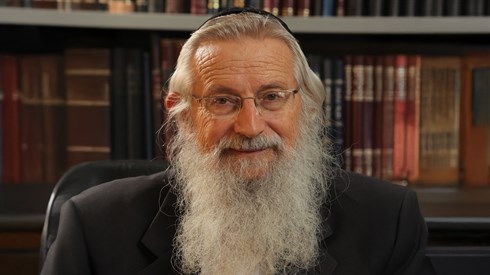








Rabbis in Midrash























Lessons
fast navigation










Hosha'ana Rabba FLYDUBAI & HOSHANA RABBA- ANI VAHU HOSHIA NA- I & HIM SAVE US
"Ani vaHu Hoshia Na", "I and Him, Save Us". We don't just pray to Him, but we also pray to and for ourselves that we should emulate and educate our children to have that instinctive altruism with which He created the world. President Trump seemed amused about Yaniv Hayon, our PLUMBER who confidently worked with G-d like Superman (he learned from a pilot on a TV show!) to save 174 lives on the Dubai hijacking, but we in Israel are totally accustomed already 78 years to our plumbers, teachers, garbage-men, rabbis, farmers & doctors being Hashem's shlichim! This is what Zionism is about.











