Yeshiva
Beit Midrash
- Library-Sifria
- Pninei Halacha
- Prayer

8. Food Touched by Unwashed Hands
We learned (in halachah 3) that because the ruach ra’ah rests upon one’s hands in the morning, one must not touch food or drink before washing his hands. Regarding a Jew who touched items of food without washing his hands, the ruling is as follows: if it is a dry food, like fruit, that can be washed, he should rinse it under water three times. Just as the washing of each hand three times purifies them, so will this washing purify the fruit. However, if he mistakenly touched drinks or food that will become ruined when washed, although there are those who are stringent to dispose of them for fear that the ruach ra’ah rests upon them (Od Yosef Chai, Toldot 6), according to most poskim, even those foods that cannot be washed are permitted to be eaten.
There are two reasons for this: first, because according to the majority of poskim, the ruach ra’ah on one’s hands does not have the ability to render food unfit for eating (Chayei Adam 2:2; Mishnah Berurah 4:14; Aruch HaShulchan 4:15). Although, regarding an alcoholic beverage, such as liquor, there are poskim who are stringent. In any case, it is agreed among most poskim that all other foods do not become invalidated by the touch of unwashed hands (Bei’ur Halachah 4:5 s.v. "Lo"). Furthermore, there are those who maintain that the ruach ra’ah has been nullified from this world (as brought in halachah 4) and there is no need to fear its damage. Therefore, one should not discard or waste foods that were touched by unwashed hands.
Similarly it is permissible l'chatchilah to buy bread or other food that is sitting on a store shelf, even though there is concern that it was touched by Jews who did not wash their hands in the morning. This is because, as we have already learned, according to most poskim, food is not invalidated by the touch of unwashed hands. Additionally, there is doubt as to whether these foods were actually touched by someone who did not wash his hands in the morning. Moreover, almost all people usually wash their hands in the morning, and it is said in the name of the Arizal (Od Yosef Chai, Toldot 8), that even washing one’s hands once is useful in weakening the power of the ruach ra’ah.
9. Minors
A number of eminent Acharonim write that it is important to ensure that even small children, who have not yet reached the age of understanding (gil chinuch), wash their hands in the morning. The reason for this is that if they don’t wash their hands, the food they touch will become ruined by the ruach ra’ah that is upon them (Chida; Pri Megadim, Mishbetzot Zahav 4:7; Mishnah Berurah 4:10). Additionally, there are those who abide by the extra pious act of washing a newborn baby’s hands, as the Ben Ish Chai (Toldot 10) writes, for by doing so, the children are raised with purity and sanctity.
However, in practice, many people are not strict about the washing of their children’s hands three times after they wake up, because according to some prominent Acharonim, the ruach ra’ah only lingers on the hands of one who is at least thirteen years of age. The more a person can connect to holiness and act to repair the world, the more the evil spirit contrastingly strives to make him impure. Hence, the ruach ra’ah does not rest on the hands of gentiles, for they are not obligated to perform mitzvot. Similarly, concerning children, the ruach ra’ah does not rest upon them in its full force until they are sanctified in the obligation of performing the mitzvot. Still, we are commanded to educate minors to perform the mitzvot, and once they start observing the holy commandments, the ruach ra’ah slightly lingers upon them as well. Therefore, from the time they reach the age of understanding and are capable of comprehending how to wash their hands, one is obligated to educate them and accustom them to washing (based on Shulchan Aruch HaRav Tinyana Edition 4:2; Eshel Avraham Butshatsh 4:3; Tzitz Eliezer, part 7, 2:4).
In conclusion, it is a mitzvah to accustom children from the time they reach the age of understanding to wash their hands three times after sleeping, and it is an obligation to wash their hands starting from the age of mitzvot, meaning thirteen years old for a male and twelve for a female. There are those who are stringent to wash their baby’s hands from the time he can touch food (Mishnah Berurah 4:10). Additionally, there are individuals who enhance the mitzvah by washing their baby’s hands starting from the time of his brit milah, or even from birth, for even then Israel’s unique holiness begins to appear (as brought in parenthesis in Shulchan Aruch HaRav there; see Kaf HaChaim 4:22 as well).
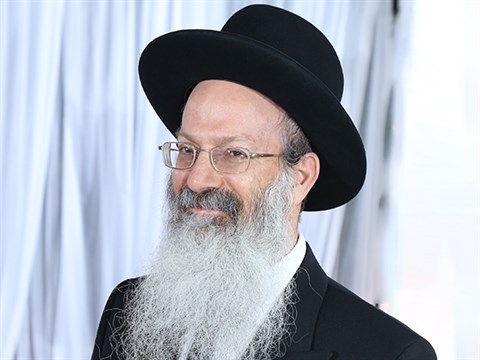
Rabbi Eliezer Melamed
Rosh Yeshiva of Har Bracha and rabbi of the settlement.

Peninei Halakha 18. Torah Verses in the Prayers and in the Berakha of She-asa Li Kol Tzorki
Chapter 10: The Laws of Tisha Be-Av





Rabbis in Midrash






















Lessons
fast navigation










Hosha'ana Rabba FLYDUBAI & HOSHANA RABBA- ANI VAHU HOSHIA NA- I & HIM SAVE US
"Ani vaHu Hoshia Na", "I and Him, Save Us". We don't just pray to Him, but we also pray to and for ourselves that we should emulate and educate our children to have that instinctive altruism with which He created the world. President Trump seemed amused about Yaniv Hayon, our PLUMBER who confidently worked with G-d like Superman (he learned from a pilot on a TV show!) to save 174 lives on the Dubai hijacking, but we in Israel are totally accustomed already 78 years to our plumbers, teachers, garbage-men, rabbis, farmers & doctors being Hashem's shlichim! This is what Zionism is about.
Moreshet Shaul Hashem Is your Shadow – part I
Based on Siach Shaul, Pirkei Machshava V’Hadracha p. 420 – an address from 1941

P'ninat Mishpat A Non-Contractor in Changing Times – part I
(based on ruling 85128 of the Eretz Hemdah-Gazit Rabbinical Courts)
Moreshet Shaul Our King on Rosh Hashana, Our Father on Yom Kippur.
Based on Aroch Siach, p. 221 (Rav Shaul Yisraeli)








