Yeshiva
Beit Midrash
- Torah Portion and Tanach
- Bereshit
- Lech Lecha

The Torah study is dedicatedin the memory of
Jacob ben Bechora
The Torah compliments our father Abraham for his faith and trust in the Lord. It states: "And he [Abraham] had faith in the Lord and the Lord reckoned it for him as an act of righteousness." Yet the rabbis of the Talmud pointed out that regarding one matter, Abraham’s faith, so to speak, was not complete and was found wanting in the eyes of the Lord. And that was regarding the promise that the Lord made to Abraham, that his descendants, through Isaac, would inherit and control the Land of Israel.
On this issue, Abraham questions God and asks him: "How can I be certain that I will inherit and control this land?" And God answers him, that only through sacrifices and disappointments, troubles and travail, will your descendants now come to inherit this land. Abraham’s doubts on this subject affected the future of the Jewish people and its connection to the Land of Israel in the short run – the Egyptian exile and the forty years in the desert – and in the long run of Jewish history as well. The doubts raised by Abraham made the achievement of the goal of Jewish sovereignty and settlement of the Land of Israel much more difficult than it originally should have been.
Abraham is of perfect faith that he will somehow have a son when he is already one hundred years old and Sarah is ninety years old. He is of serene faith when he goes to war against overwhelming odds to rescue his nephew Lot in the great struggle between the kings and empires of his time. He has faith that the Lord will save him and Sarah from the clutches of Pharaoh and later Abimelech.
He has faith that his message of monotheism will somehow be heard in a society of rampant paganism and that he will survive all attacks against him and his message. He even has faith that God will hear his pleas on behalf of the wicked people and society of Sodom. And yet when the issue of the Land of Israel and of Jewish sovereignty and entitlement over it arises, his faith flinches and he demands proof from God that somehow this will occur.
And, to a certain extent, this weakness in Abraham’s DNA, so to speak, has been transmitted throughout the Jewish generations till our very day. The Jewish people have weathered every storm in their firm and unwavering belief in the Torah, the God of Israel and His providence. In spite of the enormous price exacted from us for remaining Jewish and in spite of all coercions and enticements, the Jews have believed and remained loyal.
The issue of Jewish entitlement to the Land of Israel was always, and certainly is today, the litmus test of Jewish loyalty and belief. There are elements in Jewish society that deny this right of ours. There are others who ask Abraham’s question: "How do we know that we are supposed to be here? Is the land really ours?" This element of doubt weakens us greatly. It leads to depression, recrimination, foolish policies and grave errors. And, it certainly makes the eventual price that we are paying, and will continue to pay, for our right to exist here as a Jewish democratic state much steeper than it really need be.
The rabbis of the Talmud were certainly on to something important when they noted that only regarding God’s promise to Abraham concerning the Land of Israel did an element of doubt blemish Abraham’s perfect record of faith. How to overcome this structural weakness in our spiritual genetic makeup is the daunting challenge that faces our generation currently.
A better education about the Jewish past and about our faith and its values will certainly contribute to an improvement in this situation. But, in the final resort, it is up to each and every one of us to overcome doubts and strengthen our faith in our cause and in the promises of God and His prophets to us regarding the undoubted redemption of the people and Land of Israel.
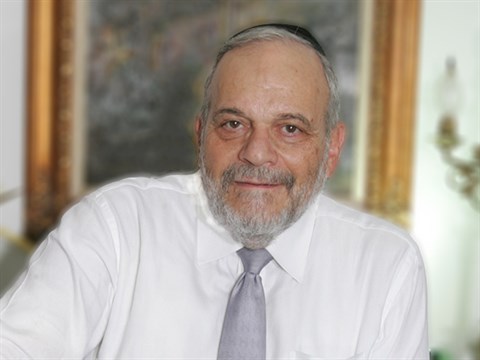








Rabbis in Midrash























Lessons
fast navigation











Hosha'ana Rabba FLYDUBAI & HOSHANA RABBA- ANI VAHU HOSHIA NA- I & HIM SAVE US
"Ani vaHu Hoshia Na", "I and Him, Save Us". We don't just pray to Him, but we also pray to and for ourselves that we should emulate and educate our children to have that instinctive altruism with which He created the world. President Trump seemed amused about Yaniv Hayon, our PLUMBER who confidently worked with G-d like Superman (he learned from a pilot on a TV show!) to save 174 lives on the Dubai hijacking, but we in Israel are totally accustomed already 78 years to our plumbers, teachers, garbage-men, rabbis, farmers & doctors being Hashem's shlichim! This is what Zionism is about.











