Yeshiva
Beit Midrash
- Torah Portion and Tanach
- Bereshit
- Lech Lecha

According to Chassidic tradition, this instruction from heaven was not localized, to be heard only by the ears of Abraham. Many people also heard this directive, but they did not feel that it had any relevance to them, and they never acted upon it. It was the holy nature of our father Abraham that compelled him to realize that the message was truly meant for him, and he then undertook the journey with his wife, Sarah, that would make them the parents of the Jewish people for all eternity.
There is also another and perhaps deeper meaning into those two words of
"lech lecha." This is not only an immediate instruction regarding a specific journey and trip, but it is also a general outline and pattern for the remainder of the life of Abraham and Sarah, that guides them long after this initial sojourn has been taken and its purpose accomplished.
Heaven, so to speak, is telling Abraham that the purpose in life is always to keep on going, never to rest on one's past accomplishments, but to always see that there is more to be done. The work of human beings in this life is never fully achieved. We are never allowed to quit, so to speak, in midstream. As long as the breath of life exists within us, we should continue to be devoted to furthering Torah accomplishments.
That is undoubtedly what the Mishnah in Avot wishes to communicate to us by saying that Abraham was tested ten times, and he able to with-stand all these trials. The Hebrew expression "to stand" not only refers to a physical description on two legs, but also implies that Abraham was elevated and made greater by each of the challenges and tests that he was able to overcome.
I have pointed out in previous articles that the rabbis saw that this was the main difference between Abraham and Noah. There are many people in the world who accomplish noble and even holy tasks. But there are very few who do so on a consistent basis throughout their entire lives, no matter what circumstances they face. It is one of the reasons why we never find in the Talmud or Jewish tradition the concept of retirement as being a time of leisure, a time of not having to face new tasks or challenges.
There is no end to the accomplishments and challenges of life when there is life itself within our bodies. The challenges of age are far different from those of youth, in that there is no excuse for attempting to shirk them and avoid their rigors. Thus, we are always meant to keep on going to the extent that we are able to do so. That has always been the message of Abraham to us, for all our generations.
Shabbat shalom
Rabbi Berel Wein
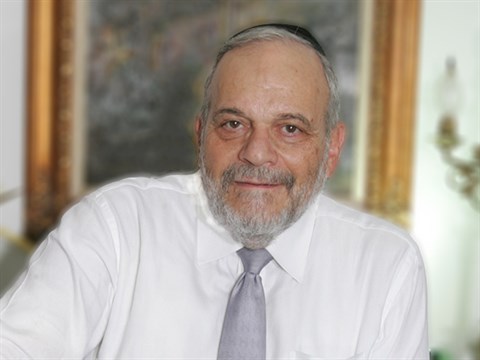










Rabbis in Midrash























Lessons
fast navigation










Hosha'ana Rabba FLYDUBAI & HOSHANA RABBA- ANI VAHU HOSHIA NA- I & HIM SAVE US
"Ani vaHu Hoshia Na", "I and Him, Save Us". We don't just pray to Him, but we also pray to and for ourselves that we should emulate and educate our children to have that instinctive altruism with which He created the world. President Trump seemed amused about Yaniv Hayon, our PLUMBER who confidently worked with G-d like Superman (he learned from a pilot on a TV show!) to save 174 lives on the Dubai hijacking, but we in Israel are totally accustomed already 78 years to our plumbers, teachers, garbage-men, rabbis, farmers & doctors being Hashem's shlichim! This is what Zionism is about.












