Yeshiva
Beit Midrash
- Torah Portion and Tanach
- Bereshit
- Bereshit

A second trenchant point that the story of Adam and Eve and their expulsion from the Garden of Eden teaches us is that human beings cannot hide from the consequences of their behavior. Eventually the piper must always be paid. When man‘s plans go awry, when his ideals turn into false idols, when he realizes the disastrous consequences of past hopes and policies, when he is literally stripped naked before the bar of history and suffers from the unforeseen consequences of his past behavior and decisions, most humans follow the example of Adam and attempt to hide from their mistakes. Adam hides in the vegetation of the Garden of Eden and naively believes that he can avoid the necessary confrontation with God. He also believes that somehow he need not confront himself either. Then the voice of the Lord is asking the question of all questions - "Where are you?" This is not a question that refers to Adam’s location on earth. Rather it is the deep probing question of self-assessment that governs all of life’s actions and vicissitudes. Every moment of our waking lives the question "Where are you?" is directed to us. And hiding in the bush does not help for the question eventually emanates from within our deepest being and cannot be wished away or ignored indefinitely. After centuries of secularism - "Where are you?" After decades of peacemaking and unilateral concessions - "Where are you?" After the pursuit of material goods to the exclusion of all else - "Where are you?" There is no hiding place from that question. It is what guides and informs our personal and national lives.
And as a final insight that certainly can be gleaned from the story of Adam and Eve and their expulsion from the Garden of Eden concerns the clothing the Lord made for them, so to speak, to cover their nakedness. In the Torah the clothing made from them was from material called ohr - spelled with an ayin and meaning "hides/leather." The Talmud records for us that in the Torah written by Rabbi Meir, the great scholar and scribe of the second century CE, the word ohr was spelled with an aleph instead of an ayin. Ohr with an aleph means "light/radiance." Human beings have the choice as to how they wish to cover their nakedness and their base and wrongheaded behavior. They can cover it with hides and leather, furs and satins. But eventually these materials fray, tear, decay and/or are no longer considered to be fashionable. Rabbi Meir’s option was to cover them with light - with Torah and faith, commitment and tenacity, repentance and good deeds. The original light of creation still exists in our universe and world. If humans are wise enough to envelop themselves in its radiance our shameful nakedness cam be covered and we will not be doomed to repeat past errors of judgment and behavior. We should attempt to retain as much of our physical and spiritual Garden of Eden as possible in this good new year that has now begun for all of us.





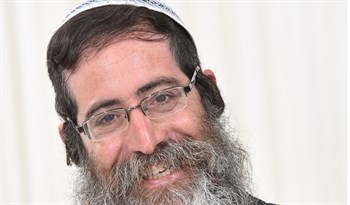




Rabbis in Midrash























Lessons
fast navigation











Various Events FOR WHOM NOT TO VOTE
Rav Zvi Yehuda Kook stressed that Israeli politics is G-dly, so I have no problem answering this common question on a Torani blog. Also, Free-Will is a G-d-given right and obligation, to "destine one's fate" (R. Soloveichik, Kol Dodi Dofek, 67), so I obviously don't tell others how to vote. But once not a few (especially young) have already asked, a couple of personal words from experience and thoughts from chazal & Rav Kook which may be of help to others, mainly for whom NOT to vote.

P'ninat Mishpat Fallout from Failure to Install Elevator – part II
based on ruling 85007 of the Eretz Hemdah-Gazit Rabbinical Courts







