Yeshiva
Beit Midrash
- Sections
- Peninei Halakha
- Shabbat and Holidays
- Laws of Hanukkah
- Peninei Halkha - Hanukkah

After the war against the Greeks ended in a military and political victory, the cultural struggle returned to the fore. We still needed to defend ourselves against the torrent of Hellenism that had already engulfed all of the surrounding cultures. Greek culture was very powerful. Its methods of scientific research were advanced; its military strategy was excellent; its system of government was efficient; its sculptures and architectural designs were impressive; its dramatic performances captivated; and its sporting events thrilled. This is why Greek culture succeeded in spreading so vigorously throughout the civilized world. Centuries later, when Rome had already become the major military power in the world, Greek culture remained the dominant cultural force.
Although the Hasmonean revolt impeded the process of Hellenization, it did not stop it entirely. A few decades later, Hellenism once again struck deep roots among wealthy Jews and among those who were in close contact with the gentiles. The Hellenists of the Hasmonean era were known as Sadducees; they did not preach total assimilation, but they believed that it was possible to combine loyalty to the Written Torah and Greek culture within a Jewish national framework.
One of the great tragedies of Jewish history is that the descendants of Matityahu, who sacrificed his life to fight Hellenism, were themselves drawn to Hellenism and persecuted the Sages of Israel, the defenders of our tradition. Matityahu’s great-grandson was King Yannai, who also served as High Priest. An evil man, Yannai believed that his death would gladden the Sages and their supporters. In order to spoil their joy, he commanded that immediately following his death a large number of Sages should be executed. After he died, however, his heirs, led by his wife Shlomtziyon, disobeyed his orders. The Sages declared the day of Yannai’s death a joyous day of thanksgiving, marking the demise of an evildoer and the salvation of the Sages.
Eventually, the slaves of the Hasmoneans – foremost among them, Herod – overcame their masters, annihilated the entire Hasmonean line, and ruled in their stead. The Sages thus declared: "Anyone who claims to be from the Hasmonean dynasty is either a slave or a liar" (bb 3b).4
Based on this, we can understand the criticism that certain Sages leveled against the Hasmoneans, accusing them of failing to appoint a king from the tribe of Yehuda, as the Torah prescribes: "The scepter shall not depart from Yehuda" (Bereishit 49:10; see Ramban ad loc.). At first, the Hasmonean leaders were called nesi’im (chieftains), but they eventually crowned themselves as kings. They also reserved the position of High Priest for themselves. Clearly, their involvement in matters of state interfered with their priestly duties, blemishing the holy service, which was supposed to be performed in sanctity and purity, and strengthening the influence of Hellenism. From a political standpoint, as well, their kingdom was lacking, as it existed in the shadow of the mighty empires and, more often than not, under their aegis. This political weakness also strengthened Hellenism’s influence over Judea.
The troubles began following the death of Yoĥanan Hyrcanus (3656/ 104 BCE). Yoĥanan’s heirs did not obey his last will; his oldest son, Yehuda Aristobulus, an ally of the Sadducees, acted like a Hellenist ruler, incarcerating his mother and brother and declaring himself king and High Priest. He died a year later, after which his brother Alexander Yannai reigned for 27 years. Yannai was a Sadducee who favored the Hellenists and fought against the Sages. Despite this, he continued to extend the borders of Israel. Alexander Yannai repented toward the end of his life, realizing that his ties with the Sadducees undermined Jewish nationalism. He therefore commanded that his righteous wife, Shlomtziyon, sister of Shimon b. Shetaĥ, inherit his throne. Shlomtziyon reigned for nine years (3684-3693/ 76-67 BCE). After her death, a bitter civil war broke out between her two sons, Hyrcanus and Aristobulus (who were educated by their father Yannai). In the year 3695 (65 BCE), the two brothers turned to the Roman commander Pompey, asking him to mediate between them. Two years later, Pompey and his army invaded Judea, abolished the Hasmonean kingdom, and stripped Judea of some of its territory. He allowed Hyrcanus to retain his position of High Priest and leader of the Jews in Judea, giving over the rest of Eretz Yisrael to autonomous gentile rule, subordinate to Rome. In the course of time, Antipater the Idumean, an adherent of Hyrcanus, established ties with the Romans and became their trusted ally, eventually taking control of Judea. After he died, his son Herod continued in his ways. Since Herod helped Hyrcanus defeat his nephew Antigonus, Hyrcanus gave him his granddaughter Miriam’s hand in marriage. This enabled Herod to eventually claim the Hasmonean throne. In the year 3720 (40 BCE), the Parthians conquered Eretz Yisrael and Aristobulus’ son Antigonus seized control of Judea taking revenge on his uncle Hyrcanus. Herod fled to Rome, where he was officially appointed King of Judea. Armed with Roman troops, he returned to the Holy Land and reconquered it. Thus began his 36-year reign. He murdered his opponents and anyone else whom he perceived as a threat to his authority, including the members of the Hasmonean family, and even some of his own sons. When Herod died in 3756 (4 BCE), the Sages ordained the date of his death – the seventh of Kislev – as a holiday. Nevertheless, Rambam considered his kingdom genuine Jewish sovereignty, as he writes in mt, Laws of Ĥanuka 3:1: In the merit of the Hasmonean victory, "sovereignty returned to the Jewish people for over 200 years." Rambam teaches us here that even Herod’s reign was better than the oppression that preceded the rebellion and the subjugation that followed the destruction of the Second Temple.↩︎
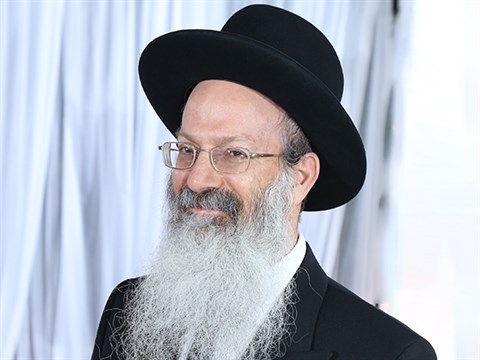
Rabbi Eliezer Melamed

Peninei Halakha 18. Torah Verses in the Prayers and in the Berakha of She-asa Li Kol Tzorki
Chapter 10: The Laws of Tisha Be-Av






Rabbis in Midrash
































Various Events FOR WHOM NOT TO VOTE
Rav Zvi Yehuda Kook stressed that Israeli politics is G-dly, so I have no problem answering this common question on a Torani blog. Also, Free-Will is a G-d-given right and obligation, to "destine one's fate" (R. Soloveichik, Kol Dodi Dofek, 67), so I obviously don't tell others how to vote. But once not a few (especially young) have already asked, a couple of personal words from experience and thoughts from chazal & Rav Kook which may be of help to others, mainly for whom NOT to vote.

P'ninat Mishpat Fallout from Failure to Install Elevator – part II
based on ruling 85007 of the Eretz Hemdah-Gazit Rabbinical Courts








