Yeshiva
Beit Midrash
- Library-Sifria
- Pninei Halacha
- Prayer

The mitzvah of prayer is ideally performed in Hebrew, for that is the language in which Anshei Knesset HaGedolah composed the wording of prayer, and it is the Holy Tongue which was used to create the world. However, b’dieved, a person who does not understand Hebrew may fulfill his obligation in other languages (Sotah 32a; Shulchan Aruch 62:2).3
There is a fundamental difference between the person who prays in Hebrew and the person who prays in another language. The one who prays in a different language does not fulfill his obligation without understanding the meaning of the words he is reciting. However, one who prays in Hebrew fulfills his obligation even if he does not understand the meaning of the words. Still, even one who prays in Hebrew is obligated to understand the meaning of the first verse of Shema and the first blessing of the Amidah, because not having kavanah for those parts of prayer prevents him from fulfilling his obligation (Mishnah Berurah 101:14, 124:2; Bei’ur Halachah 62:2).
In contrast to other languages, Hebrew has intrinsic value, since the Torah was given to us in Hebrew and it was used to create the world. Even a person who does not understand Hebrew can fulfill the mitzvah by praying in the Holy Tongue because of its inherent significance. However, the value of every other language derives from the fact that it expresses the person’s thoughts and feelings. Hence, a person who does not understand the language that he is saying renders the words useless, and therefore cannot use it to recite Shema and the rest of the prayers.
In practice, a person who does not understand Hebrew is permitted to choose the language in which he wants to pray. Although the advantage of praying in a language that he understands is that he can concentrate on the words, on the other hand, one who prays in Hebrew has the benefit of praying in the Holy Tongue, for every Hebrew letter is directed towards the rectification of all the spiritual worlds (see Bei’ur Halachah 101:4; Kaf HaChaim 16).
Permission to pray in any language is granted as a temporary concession (k’hora’at sha’ah), specifically for people who do not understand Hebrew. However, it is prohibited to establish a minyan that will regularly pray in a different language. This was one of the sins of the Reform Movement which translated the prayers to German and established prayer services in a foreign tongue, causing generations after them to forget the Holy Tongue, thereby giving way to the abandonment of Judaism and assimilation (Chatam Sofer, Orach Chaim, 84 and 86; Mishnah Berurah 101:13; see further in this book 17:8).
The mitzvah of reciting Shema, in principle, may also be fulfilled with a translation. However, some doubt was raised regarding the accuracy of the translation of a number of words. Therefore, today, in the opinion of some eminent Acharonim (later Torah authorities), one cannot fulfill his obligation of reciting Shema by saying a translation of the words (Mishnah Berurah 62:3; further in this book 15:9).
3 Regarding the recital of Shema, there is disagreement. According to Rebbi, Shema may only be said in the Holy Tongue, whereas, according to the Chachamim, it may be recited in any language (Berachot 13a). Because in Sotah 32b there is a stam mishnah (a mishnah that does not specify who said it) in which it is written that the halachah is like the Chachamim who maintain that the recital of Shema, Birkat HaMazon, Birkat Kohanim, and other berachot may be said in any language, also here, the halachah is according to the Chachamim.
Regarding prayer, it is the opinion of the Rif that only a person who prays in a minyan may pray in a different language, since the Shechinah (Divine Presence) dwells there and his prayer will be accepted. However, a person who is praying individually must specifically pray in the Holy Tongue, for his prayer will not be accepted in another language. Nevertheless, most poskim agree with the Rosh who is of the opinion that even while praying individually, one may also pray in a different language, with the exception of Aramaic, and that is the ruling in the Shulchan Aruch 101:4, in the concluding statement, "Yesh omrim."
From the library of Yeshivat Har Bracha
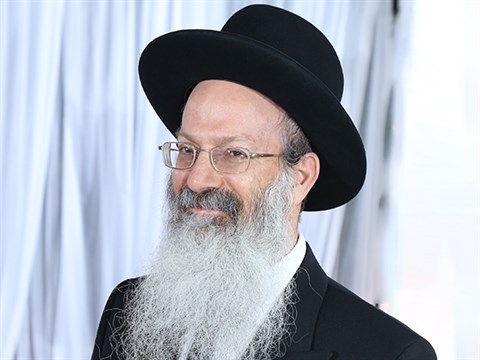
Rabbi Eliezer Melamed
Rosh Yeshiva of Har Bracha and rabbi of the settlement.

Peninei Halakha 18. Torah Verses in the Prayers and in the Berakha of She-asa Li Kol Tzorki
Chapter 10: The Laws of Tisha Be-Av




Rabbis in Midrash






















Lessons
fast navigation










Hosha'ana Rabba FLYDUBAI & HOSHANA RABBA- ANI VAHU HOSHIA NA- I & HIM SAVE US
"Ani vaHu Hoshia Na", "I and Him, Save Us". We don't just pray to Him, but we also pray to and for ourselves that we should emulate and educate our children to have that instinctive altruism with which He created the world. President Trump seemed amused about Yaniv Hayon, our PLUMBER who confidently worked with G-d like Superman (he learned from a pilot on a TV show!) to save 174 lives on the Dubai hijacking, but we in Israel are totally accustomed already 78 years to our plumbers, teachers, garbage-men, rabbis, farmers & doctors being Hashem's shlichim! This is what Zionism is about.
Moreshet Shaul Hashem Is your Shadow – part I
Based on Siach Shaul, Pirkei Machshava V’Hadracha p. 420 – an address from 1941

P'ninat Mishpat A Non-Contractor in Changing Times – part I
(based on ruling 85128 of the Eretz Hemdah-Gazit Rabbinical Courts)
Moreshet Shaul Our King on Rosh Hashana, Our Father on Yom Kippur.
Based on Aroch Siach, p. 221 (Rav Shaul Yisraeli)








