Yeshiva
Beit Midrash
- Torah Portion and Tanach
- Vayikra
- Behar

The Torah study is dedicatedin the memory of
Yaakov Ben Behora
Rashi questions the connection between the Sedra's title and this opening Mitzva, and makes the famous comment, "Mah inyan Shmita ayzel Har Sinai - what special connection does Shemita have to Mount Sinai?"
Rashi gives a puzzling answer: "Just as the laws of Shmita were given at Har Sinai, so ALL the Mitzvot and their particulars were delineated at Sinai." Uh, excuse me - ask all the commentators - why should Shmita be singled out as representative of all the Mitzvot? What is so unique and special about the Sabbatical Year?
I suggest to you that there IS something quite unique about Shmita. Of all the Mitzvot, none requires more Emuna than Shmita. For an agricultural society to stop all field work for one or two years is mind-boggling! How will we survive? Who will pay the bills? Amazingly, Hashem guarantees that He will provide enough food to carry us through the fallow years, if only we have faith.
It is this quality of Emuna which is a necessary component of all Mitzvot. To stop work on Shabbat, to strictly keep kosher, to purchase expensive Tefilin, Etrogim or Mezuzot, one must have faith that this is how Hashem wants us to conduct our lives.
Certainly, this faith-factor applies in the fullest sense to the Mitzva of living in Israel. You cannot live here without deep Emuna, without a rock-solid belief that our G-d gave His people a Land for all eternity where we can most fully express our Judaism. Security, stress, economic hardship: all the excuses are valid, yet they melt when met head-on by genuine Emuna.
Some people making Aliya fill their suitcases with white tuna, some with electronics, others with cash. I suggest we are better served by packing our bags with large does of Emuna.
--------------------------
This is a weekly column contributed by Aloh Naaleh an organization devoted to motivating Jews to make Aliya.
Aloh Na'aleh
POB 4337, Jerusalem 91042
Tel: 972-2-566-1181 ext. 320 ~ Fax: 972-2-566-1186
Email: [email protected]



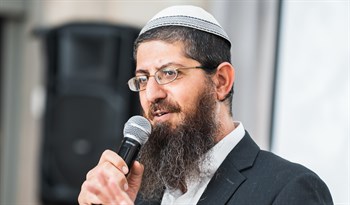





Rabbis in Midrash























Lessons
fast navigation










Hosha'ana Rabba FLYDUBAI & HOSHANA RABBA- ANI VAHU HOSHIA NA- I & HIM SAVE US
"Ani vaHu Hoshia Na", "I and Him, Save Us". We don't just pray to Him, but we also pray to and for ourselves that we should emulate and educate our children to have that instinctive altruism with which He created the world. President Trump seemed amused about Yaniv Hayon, our PLUMBER who confidently worked with G-d like Superman (he learned from a pilot on a TV show!) to save 174 lives on the Dubai hijacking, but we in Israel are totally accustomed already 78 years to our plumbers, teachers, garbage-men, rabbis, farmers & doctors being Hashem's shlichim! This is what Zionism is about.
Moreshet Shaul Hashem Is your Shadow – part I
Based on Siach Shaul, Pirkei Machshava V’Hadracha p. 420 – an address from 1941









