YeshivaThe torah world Gateway
Beit Midrash
- Sections
- The Life of Tzaddikim
- Harav Avraham Yitzchak Hacohen Kook
The Torah study is dedicatedin the memory of
R. Avraham ben-tziyon ben shabtai
Rabbi Tzvi Yehudah was very pained by the fact that in a memorial oration whose purpose it was to honor one great individual, hinted criticism was voiced concerning Rabbi Kook. Moreover, who dare criticize Rabbi Kook?! This happened a short time before the third of Elul - the date of Rabbi Kook's death. When the third of Elul arrived - Rabbi Tzvi Yehudah spoke about his deceased father, Rabbi Kook, and made reference to this matter.
It states in the weekly Torah portion: "If you come upon a bird's nest... chase away the mother" (Deuteronomy 22:6). The Mishna teaches that "one who says: 'Your lovingkindness extends to the bird's nest… must be silenced." That is, if a person says: "Your lovingkindness extends to the bird's nest" - i.e., Just as You, God, have given us this commandment which embodies Your attribute of lovingkindness, so too display lovingkindness towards us - he must be silenced. The Talmud explains the reason for this: One who says this assigns to God's ways the attribute of lovingkindness, when, in fact, God's ways are "decrees." That is, the ways of God are not governed by "lovingkindness" in the human sense of the word. They are, in fact, divine "decrees" - beyond our comprehension.
Rabbi Tzvi Yehudah continued, explaining that the lovingkindness of one who follows the ways of the Almighty, is not the result of human weakness. Such a person's lovingkindness is similar to divine decree. This, in fact, is Torah! The lovingkindness, love for the Jewish people, and entire outlook of Rabbi Kook were not ruled by mere human compassion. They were motivated by divine decree. Rabbi Kook's love for the Jewish people was the result of penetrating and divine insight into the true essence of the Jewish people. "And one who speaks in such a manner regarding Rabbi Kook must be silenced!" shouted Rabbi Tzvi Yehudah.
Rabbi Tzvi Yehudah told all of this to me incidentally. In fact, he merely wished to explain to me why the family of the Rabbi who had spoken in honor of Rabbi Chaim Ozer was upset with him. Rabbi Tzvi Yehudah believed that it was because of his having said in response to words of that Rabbi that he "must be silenced." The impact of Rabbi Tzvi Yehudah's demand was felt.
This is a deep concept. The ways of God are not governed by anything even resembling human lovingkindness. They are ruled by divine wisdom. They are absolute decrees. Such was the nature of Rabbi Kook's love for the Jewish people. I later came across this concept in Rabbi Kook's seminal work, "Orot" (Orot Yisrael, chpt. 4).
We are the torchbearers of Rabbi Kook's profound approach, an approach which went misunderstood in the Rabbi's own day. Indeed, it continues to be somewhat misunderstood by many - and perhaps to the majority - of Israel's Torah scholars today. They were unable to fully grasp his teachings in his time, and today, too, are unable to fully grasp them.
The Talmud tells us that the Sages were unable to fully grasp the teachings of Rabbi Meir. In addition, it is told of Rabbi Meir that he traveled afar for a year. Because he was without a Scroll of Ester, when the Purim holiday arrived he wrote a scroll from memory and read from it. And though ordinarily it is forbidden to write the Scroll of Ester from memory, Rabbi Meir was an exception, for "the entire Torah was as if before his very eyes." The entire Torah was before his eyes, and because of his greatness, other sages were unable to fully grasp his teachings.
Some Torah scholars reach unique levels of greatness, and, as a result, few are able to truly grasp their teachings. Sometimes it takes generations for their profundity to become apparent and understood. Though in the days of Rabbi Kook only a handful of individuals understood him, those who met him admired him greatly.
It is well known that Rabbi Isser Zalman Meltzer, one of the leading Torah scholars in his day, grandfather of the Yeshiva world in Eretz Israel, and author of "Even HaEzel," greatly admired Rabbi Kook. It is told that when Rabbi Isser Zalman Meltzer visited Rabbi Chaim Ozer he said, "We are 'Torah giants' until we reach the door of Rabbi Kook; when we pass through Rabbi Kook's door we cease being 'giants.' We do not reach his level." It is also told that Rabbi Isser Zalman Meltzer - who in addition to being a leading scholar was also extremely pious - once spent time together with Rabbi Kook recuperating in the Carmel Mountains. When he saw the great fervor with which Rabbi Kook prayed the weekday afternoon prayer he said, "If only I could pray the 'Neilah' of Yom Kippur the way Rabbi Kook prays the ordinary weekday afternoon prayer while in recuperation."
Here, then, is a personage in whose light we may become illuminated.
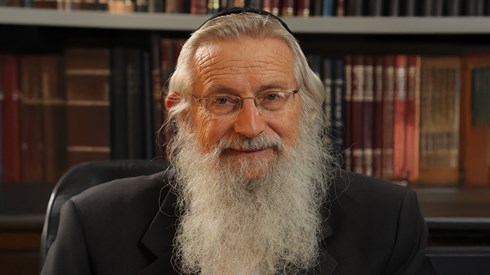

Harav Avraham Yitzchak Hacohen Kook What Makes Rav Kook Into Such a "Game-Changer"?
An Overview of His Personality & Writings in Honor of His Yahrtzeit

Rabbis in Midrash











Lessons
fast navigation








The Land of Israel LGBT'S IN ISRAEL
The question was asked, how can one make Aliyah with the LGBT parades?
Kuzari -Rabbi Ari Shvat Kuzari class 7 - Five Accumulative Proofs of G-d
As a preparation for the Kuzari's classic proof of G-d from the mass-revelation at Sinai, we start here with 5 other directions to strengthen our belief which also contribute to what the Kuzari will present as well.
Ein Aya Muscle & Meaning: The Dual Nature of Gevurah (Physical Strength)
Is physical strength and fitness a necessity or an ideal? Although it if often totally overlooked among topics of Judaism, Rav Kook writes that it clearly is also a necessity to deter the many enemies of Israel, but even in Y'mot HaMashiach, in the Messianic era, to a certain extent, it's ideal continues even after our enemies will have been finished off.
Chukat "HOW ENTEBBE STOLE THE BICENTENNIAL
The Difference Between Historic & Eternal"
As we approach America's 250th birthday, it's worth remembering her 200th Bicentennial birthday, on Jul. 4th 1976, when Israel "stole the show" by shocking the world & miraculously saving 101 hostages in a foreign continent. As Pres. As Pres. Trump decides which countries get priority in his new Middle-East, it's worth reminding him of the difference between historic events and eternally historic ones. This obviously connects with this week's parsha, as well!
Kuzari -Rabbi Ari Shvat Kuzari class 6 - The Parable of the King of India
The advantages of testimony over circumstantial evidence or philosophical speculation.
Kuzari -Rabbi Ari Shvat Kuzari class 5- "Proofs of G-d"
This may be the most important class of the entire book, where we finally get to the Jewish proof of the existence of G-d and truth of the Torah. We should follow His own direction where He tells us how to get to Him: through the Nation of Israel: Jewish history, Jewish prophets (and today, prophecies fulfilled), and national reward & punishment towards Am Yisrael.
Ein Aya One Humanity, One Creator, One Jerusalem
Rav Kook innovatively and beautifully explains this aggadeta where our sages say that after Jerusalem was destroyed her cinnamon fragrance is only found locked in a particular kingdom's treasury.