YeshivaThe torah world Gateway
Beit Midrash
- Torah Portion and Tanach
- Vayikra
- Emor

It is permitted and required to mention Hashem’s name in the context of berachot. But the question is why are we blessing Hashem? Wouldn’t it be more appropriate to thank Him? We should mention another use of Hashem’s name, one which is connected to the curser. Moshe had used Hashem’s name to curse the Egyptian who was beating a Jew, after the Egyptian impregnated the Jew’s wife with the child who grew up to be the curser of Hashem (Rashi, ad loc.).
In order to gain more insight, we should look at one of the most fascinating blessings of Hashem, described by the gemara in Berachot (7a). Rabbi Yishmael ben Elisha said that "one time I entered the inner sanctum" and saw Hashem sitting on His great throne, "and He said to me, ‘Yishmael, My son, bless Me.’" Yishmael responded: "Shall it be Your desire that Your mercy will conquer Your anger … and shall You treat Your children with the attribute of mercy and go, on their behalf, beyond the letter of the law." Hashem shook his head in acquiescence.
Why did Rabbi Yishmael, who was the kohen gadol, say that he went "one time" into the inner sanctum, if he actually did it every year? The midrash (Otzar Hamidrashim, p. 444) tells another monumental story about Rabbi Yishmael, which is also introduced with the words "one time." That is the story of the Roman tyrant who approached some of the greatest rabbinical leaders of the era and accused them of responsibility for the brothers’ sale of Yosef and demanded that they give their lives in place of their deceased forefathers. Rabbi Yishmael asked from his colleagues to share in the sin of using Hashem’s name so that he could go and see what had been decreed from the Heavens, so that he could either accept it or use the Name to fight it.
Let us suggest that these stories actually form two sides of one coin. Rabbi Yishmael was called upon, along with his colleagues, to accept upon himself the "dreadful" divine decree to be killed and in that way be a utensil for the sanctification of His name. In confirming this matter, Rabbi Yishmael went that one time into a very special holy place to "confer with Hashem." At that time, Hashem asked Yishmael to bless Him, i.e., to accept the decree upon himself. It was as if he made a standard beracha of "Blessed are you, Hashem," which indicates that one believes in Hashem, whether for "good" or for "bad." When one makes a beracha before eating, he is in essence saying that he is eating in order to serve his Creator and, similarly, accept His decisions.
Let us join with Rabbi Yishmael’s call and pray that Hashem will treat us with the mercy we need to meet the standards He sets for us.

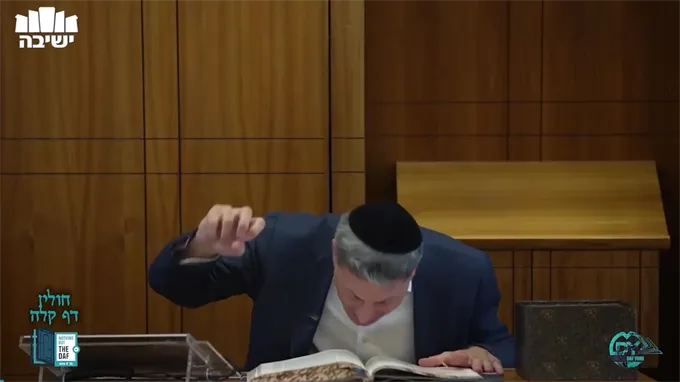


Rabbis in Midrash






















Lessons
fast navigation











Shoftim TESHUVA IN COURT OF LAW?
Parshat Shoftim-Chodesh Elul
Why does parshat Shoftim always come out during Elul? This innovative and central explanation is an eye-opener regarding many aspects of Judaism.

The Month of Elul TESHUVA IS THE ANSWER
The month of Elul serves as a vital time for self-reflection and personal accountability to prepare for true repentance.

P'ninat Mishpat P'ninat Mishpat: Realtor’s Fee on Large Commercial Building – part I
(based on ruling 85031 of the Eretz Hemdah-Gazit Rabbinical Courts)
(based on ruling 85031 of the Eretz Hemdah-Gazit Rabbinical Courts)
P'ninat Mishpat Complaints about Contractor’s Work – part II
(based on ruling 83037.1 of the Eretz Hemdah-Gazit Rabbinical Courts)
(based on ruling 83037.1 of the Eretz Hemdah-Gazit Rabbinical Courts)
Chemdat Yamim Moreshet Shaul: The Goal of an Agricultural Yeshiva – part I
Based on Siach Shaul, Pirkei Machshava V’Hadracha p. 263 (address at the laying of the cornerstone of the Yeshiva Chakla’it in Kfar Haroeh)
Based on Siach Shaul, Pirkei Machshava V’Hadracha p. 263 (address at the laying of the cornerstone of the Yeshiva Chakla’it in Kfar Haroeh)