Yeshiva
Beit Midrash
- Shabbat and Holidays
- Rosh Hashana
- The Essence of Rosh Hashana

The Torah study is dedicatedin the memory of
Asher Ben Haim
2. When to Eat the Omens
Favorable Signs for the New Year
On Rosh Hashanah, our every action has significance pertaining to the year to come. This is the first day of the year, and it is on this day that God apportions life to all creatures; therefore, all action, speech, and thought on this day influence the entire year. In the words of the sages, "It is a significant omen" (Keritot 5b).
Consequently, the Jewish people customarily eat foods on the night of Rosh Hashanah which act as auspicious omens for the coming year. We eat an apple dipped in honey so that it be a good and sweet year; leeks ("Karti"), so that our enemies be decimated ("Yikartu"; this word comprises the same Hebrew letters as "Karti"); beets ("Selek"), so that our adversaries depart ("Yistalku"; of the same letters as "Selek") pomegranate, so that our merits increase as [the seeds of] a pomegranate; etc.
It is not enough to just consume these omens; we recite a prayer over each one. For example, over dates we say, "May it be Your will, Lord our God and the God of our forefathers that our enemies be consumed."
When to Eat the Omens
There are some who eat these items even before partaking of bread. The more correct practice, though, is to eat them after the bread. The reason for this is, firstly, that Jewish law teaches us to give preference to bread's blessing over other blessings; secondly, if we eat the good omens before the bread, a question will arise as to whether or not we must recite a blessing after them. Hence, after Kiddush we wash our hands, cut the Challah, dip it in some salt, dip it into honey as a good omen, and then eat some of it.
After this, we eat some of the omens. But, before eating we must bless "boreh peri ha'etz" over the date. The reason for this is that the blessing "HaMotzie" which we recite over the Challah bread includes only those food items which are considered part of the meal; the date, pomegranate, and apple, however, are not part of the meal, and we must therefore recite a separate blessing over them.
We begin by blessing over the date because it is one of Israel's seven species, and, among the seven species, it is takes preference over the pomegranate. The blessing over the date of course covers the pomegranate and apple as well. After blessing over the date we eat some of it, and only then do we say, "May it be Your will..."
There is no need to recite a blessing over the omens which generally call for the "boreh peri ha-adamah" blessing. The reason for this is that because they are cooked like the rest of the foods in the meal, they are considered an essential part of the meal and hence covered by the initial blessing over the bread.
--------
Some of the translated terms and expressions in the above article were taken from, or based upon, Artscroll's Machzor Zikhron Reuven for Rosh Hashanah
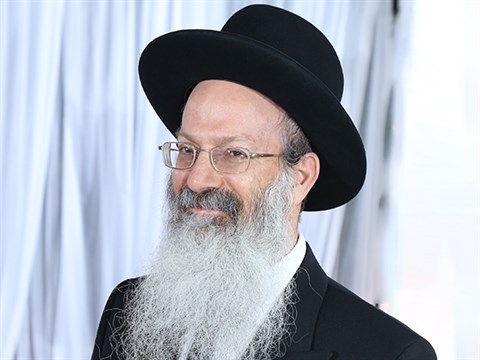
Rabbi Eliezer Melamed
Rosh Yeshiva of Har Bracha and rabbi of the settlement.

Peninei Halakha 18. Torah Verses in the Prayers and in the Berakha of She-asa Li Kol Tzorki
Chapter 10: The Laws of Tisha Be-Av





Rabbis in Midrash






















Lessons
fast navigation










Various Events FOR WHOM NOT TO VOTE
Rav Zvi Yehuda Kook stressed that Israeli politics is G-dly, so I have no problem answering this common question on a Torani blog. Also, Free-Will is a G-d-given right and obligation, to "destine one's fate" (R. Soloveichik, Kol Dodi Dofek, 67), so I obviously don't tell others how to vote. But once not a few (especially young) have already asked, a couple of personal words from experience and thoughts from chazal & Rav Kook which may be of help to others, mainly for whom NOT to vote.

P'ninat Mishpat Fallout from Failure to Install Elevator – part II
based on ruling 85007 of the Eretz Hemdah-Gazit Rabbinical Courts