47 Lessons
!["FIRST 'THE NATIONS WILL SAY: 'G-D DID GREAT FOR [ISRAEL]' "](/SiteProjects/YeshivaModels/Logic/Images/spriteRszRound.jpg?pic=R-AriShvat.jpg&cacheVer=54)
Achrei Mot "FIRST 'THE NATIONS WILL SAY: 'G-D DID GREAT FOR [ISRAEL]' "
We don't always understand and sometimes Israel pays a price for being the closest nation to Hashem, but that is essentially part of our role. Rav Kook explains just like the prophets often suffered for saying uncomfortable G-dly messages, similarly Am Yisrael historically had to pay the prices as "the conscience of mankind", and the way Hashem is seen to the world. Recently, more and more gentile leaders are beginning to point out the unique and "Chosen" role of Israel, including a game-changing article by an editor of a leading British paper.
Tazria "NOT ALL HATE IS CREATED EQUAL"- p. Tazria-Metzora
The parsha teaches the tragedy of being alone and separate, but our 2,000 year galut is exactly that. Because of the universality of anti-Semitism, we unfortunately sometimes tend to make simplistic associations, & lump all this hatred together, as if it's the same. Yes, Iran hates us like the Nazis did, but today's war on all accounts is totally different, and we must thank G-d on Yom HaAtzma'ut for all those differences.
Yom Haatzmaut The Yom HaZIKARON SIREN- EVERY ARROW NEEDS A HEAD!
What do we and should we think about during the national siren in Israel on Yom HaZikaron? What is the significance, and what are the spiritual benefits and messages of Yom haZikaron? What are those who miss this experience missing out on? (see also my class here on "Wars & Selflessness", and the entire series of Orot HaMilchama of Rav Kook)
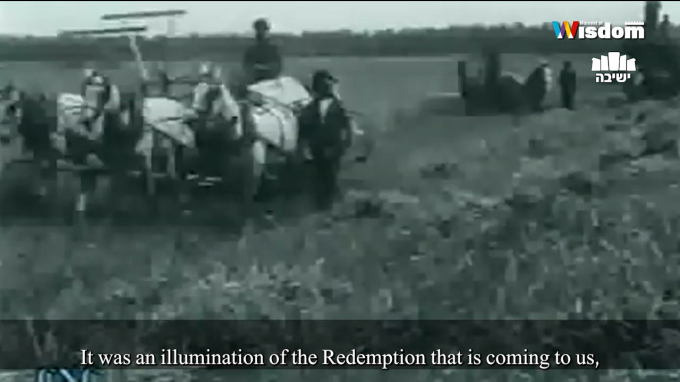
The Essence of the Day Nearing "the day that is completely Shabbat"
How did Rabbi Alfiya know when the Independence of the nation of Israel will come 20 years older?

Peninei Halakha 11. Shaving, Haircuts, Weddings, and Tahanun
Chapter 4: Yom Ha-atzma’ut
Do the customs of mourning that we observe during the omer period apply to Yom Ha-atzma’ut? Responses to this question have varied greatly.
Peninei Halakha 10. Yom Yerushalayim
Chapter 4: Yom Yerushalayim
All the holy places in Judea and Samaria – most significantly the Old City of Jerusalem and the Temple Mount – were liberated, along with the Sinai Peninsula and the Golan.
Peninei Halakha 9. Celebrating Yom Ha-atzma’ut on a Different Date
Chapter 4: Yom Ha-atzma’ut
When Yom Ha-atzma’ut falls out on a Friday or Shabbat, there is good reason for concern that the celebrations and ceremonies will cause public desecration of Shabbat.
Peninei Halakha 8. She-hecheyanu and Hallel at Night
Chapter 4: Yom Ha-atzma’ut
Some maintain that the salvation of Yom Ha-atzma’ut is similar to that of the Exodus from Egypt, and thus we must recite Hallel at night.
Peninei Halakha 7. Reciting a Berakha on Hallel
Chapter 4: Yom Ha-atzma’ut
Some say that even though we thank God on Yom Ha-atzma’ut, we should not recite Hallel with a berakha.
Peninei Halakha 6. Reciting Hallel
Chapter 4: Yom Ha-atzma’ut
It is a mitzva to recite Hallel on special occasions, in order to thank and praise God for the miracles He performs on our behalf.
Peninei Halakha 5. Establishing Yom Ha-atzma’ut as a Permanent Holiday
Chapter 4: Yom Ha-atzma’ut
There is a mitzva to establish a holiday of rejoicing and praising God on a day when the Jewish people were saved. It was on this basis that the Sages established Purim and Ĥanuka as permanent holidays.
Peninei Halakha 3. Salvation of Israel
Chapter 4: Yom Ha-atzma’ut
On Yom Ha-atzma’ut (Israel’s Independence Day), the Jewish people were delivered from bondage to freedom, from subjugation by foreign powers, with all it entails, to political independence.
Peninei Halakha 4. The Three Oaths
Chapter 4: Yom Ha-atzma’ut
The verse states: “I adjure you, O maidens of Jerusalem, by gazelles or by hinds of the field: Do not wake or rouse love until it please!” ). The Sages explain that God administered three oaths: two to Israel – not to ascend to their land forcefully all together and not to rebel against the nations – and one to the gentiles – not to subjugate the Jews excessively.
Peninei Halakha 2. The Beginning of the Redemption and Sanctifying God’s Name
Chapter 4: Yom Ha-atzma’ut
After so many years passed without God’s word coming to fruition, God’s name became increasingly desecrated in the world, and the enemies of Israel decided that there is no chance that the Jews would ever return to their land
Peninei Halakha 1. The Mitzva of Settling Eretz Yisrael
Chapter 4: Yom Ha-atzma’ut
When the State of Israel was established, on the fifth of Iyar in 5708 (1948), the Jewish people fulfilled the mitzva of settling Eretz Yisrael (the land of Israel).
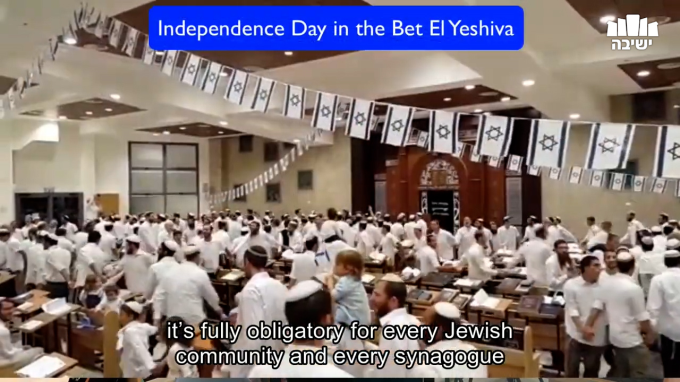
Beha'alotcha Torah Source for Yom Ha'Atzma'ut
A historical application of a word found in this week's Parshat Beha'alotkha in Jewish communities throughout the world, showing how it clearly also applies to celebrating Yom Ha'Atzma'ut in our time.
The Obligation of Thanking Hashem Remembering the 6 Day War- Yom Yerushalayim & Declaring New Holidays
It sounds complicated to declare new holidays, but it's actually not at all. Similarly to allow haircuts and music during the Omer also is simple. Just declaring Hallel with a bracha is more complicated, but an historic return to the forgotten background of the "6 Day War" helps clarify that, as well.

Additional Lessons No Destruction After Redemption
Translated by Hillel Fendel
It is a well-known Torah truism that a third destruction, following those of the First and Second Holy Temples, will never occur. There will be no Exile following the beginning of the Redemption that we have been experiencing these recent decades and more.

Additional Lessons Yom Ha'Atzmaut - A Holy Day?
Our independence day is a happy day, but is it a holy day? We established a state but why do we see it as a day of some special spirtual event?

The Essence of the Day Israel Ind. Day - Missing Link in Ancient Rabbinic Code
Though the Hebrew calendar date of Israel Independence Day was decided upon by the Israeli government a year after the establishment of the State, their choice of day - the 5th of the Hebrew month of Iyar - received a divine stamp of approval in that this very day filled the missing link in a Rabbinic puzzle of centuries.