Yeshiva
Beit Midrash
- Sections
- Peninei Halakha
- Shabbat and Holidays
- Jewish Holidays
- Yom Haatzmaut

After Yom Ha-atzma’ut was established as a day of joy and thanksgiving, the question arose: do the customs of mourning that we observe during the omer period apply to Yom Ha-atzma’ut? Responses to this question have varied greatly. The accepted practice is not to observe customs of mourning that subvert the joy of Yom Ha-atzma’ut, and therefore, one may dance and play music. However, one should not schedule a wedding on that day, because avoiding weddings is not considered an expression of mourning that clashes with the joy of Yom Ha-atzma’ut.
Those who shave regularly should shave in advance of Yom Ha-atzma’ut, just as one would put on special clothing before the holiday begins. Regarding haircuts, it seems that only one who looks disgraceful because of his long hair may cut his hair prior to Yom Ha-atzma’ut. One who looks decent, however, may cut his hair only on Yom Ha-atzma’ut itself, because then the joy of the day overrides this custom of mourning.[12]
The Chief Rabbinate, under the leadership of R. Isser Yehuda Unterman and R. Yitzĥak Nissim, determined that even Ashkenazim who observe the customs of mourning during the latter part of the omer period should not curtail their joy on the 28th of Iyar, Yom Yerushalayim. Indeed, they should even be permitted to schedule weddings then. This is because, first of all, many communities terminate all the restrictions after Lag Ba-omer (see above 3:2-4), and moreover, now that the 28th of Iyar has been instituted as a day of thanksgiving and joy over the miracle that God performed for the nation of Israel, one should certainly refrain from mourning.
We do not recite Taĥanun on Yom Ha-atzma’ut or Yom Yerushalayim, or at Minĥa preceding these days (Peninei Halakha: Prayer 21:7; see also ch. 21 n. 1).
[12] Sephardic Chief Rabbi R. Yitzĥak Nissim writes (Hilkhot Yom Ha-atzma’ut Ve-Yom Yerushalayim, pp. 334-340) that all customs of mourning are canceled on Yom Ha-atzma’ut. He bases his ruling on the poskim who maintain that one who has not yet fulfilled the mitzva of procreation may get married during the omer period (Radbaz, Pri Ĥadash). Similarly, some people cut their hair during the omer period in honor of Shabbat and Rosh Ĥodesh (Radbaz, R. Yaakov Emden). Furthermore, R. Ĥayim Palachi writes (Mo’ed Le-khol Ĥai §6) that since a miracle happened to some of the people of his city on the eighth of Iyar, and to others on the eleventh, it is their custom to cut their hair on these days. In addition to R. Nissim’s proofs, there is even more room for leniency when it comes to shaving, because shaving is not festive in nature; it simply eliminates one’s mournful appearance, as we explained above (3:7). Responsa Yaskil Avdi 6:10, on the other hand, does not permit haircuts or weddings on Yom Ha-atzma’ut. My teacher and master, R. Zvi Yehuda Kook, used to rebuke students who usually shave but look like mourners on Yom Ha-atzma’ut, saying, “Their countenance accuses them” (Yeshayahu 3:9) – that they are not happy and that they do not truly thank God for the miracle. See R. Shmuel Katz’s essay in Ha-Rabbanut Ha-Rashit, vol. 2, pp. 877-882.
Regarding mourners: According to a responsum written by R. Goren (op. cit. p. 900, n. 37), Yom Ha-atzma’ut and Yom Yerushalayim, like Ĥanuka, do not cancel shiva. Therefore, a mourner does not recite Hallel, nor do others recite Hallel in a house of mourning; they must recite it elsewhere. If the mourner has completed shiva, he should join the festive prayers and celebrations, as long as there is no live music. A mourner may not cut his hair during shloshim in honor of these holidays.
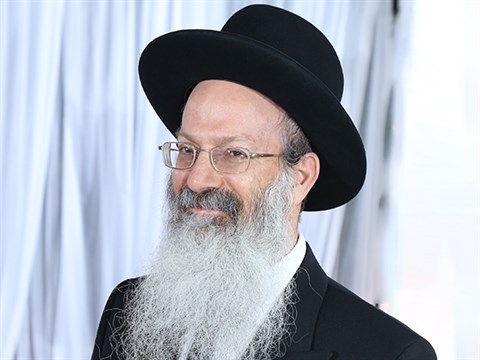
Rabbi Eliezer Melamed

Peninei Halakha 18. Torah Verses in the Prayers and in the Berakha of She-asa Li Kol Tzorki
Chapter 10: The Laws of Tisha Be-Av
Peninei Halkha - Hanukkah 6. Delaying Candle-Lighting When Necessary
Chapter 13: When and Where to Light Hanuka Candles





Rabbis in Midrash































Various Events FOR WHOM NOT TO VOTE
Rav Zvi Yehuda Kook stressed that Israeli politics is G-dly, so I have no problem answering this common question on a Torani blog. Also, Free-Will is a G-d-given right and obligation, to "destine one's fate" (R. Soloveichik, Kol Dodi Dofek, 67), so I obviously don't tell others how to vote. But once not a few (especially young) have already asked, a couple of personal words from experience and thoughts from chazal & Rav Kook which may be of help to others, mainly for whom NOT to vote.

P'ninat Mishpat Fallout from Failure to Install Elevator – part II
based on ruling 85007 of the Eretz Hemdah-Gazit Rabbinical Courts








