84 Lessons

Mishpatim REFINING 'PATIENCE' W/ KIDS WHO LEAVE 'DERECH'
There's a common question today: how to deal with the unfortunate phenomena of children from religious homes who somewhat leave Torah. This innovative approach shows how to stay sane, not blame ourselves, and even turn that issue from being a major problem, into a G-d given opportunity to improve one of the 13 G-dly traits we are meant to emulate: Erech Apayim (Patience).

Mishpatim How Does a Heter Iska Work?
Andy Gross, a businessman who is proud that he is now observing mitzvos, is on time for his appointment. After a brief greeting, I ask him what brings him to my office on this beautiful morning. “I recently learned that even though the Torah prohibits paying or receiving interest, there is something called a heter iska that legalizes it. How can we legitimize something that the Torah expressly prohibits?” Indeed, Andy’s question is both insightful and important, and deserves a thorough explanation. Why don’t you join us by reading the attached article?

Mishpatim The Laws of G-d Are Truth!
One of the Torah's guidelines for our everyday lives found in this weekly portion is a special instruction as to how to lead the public when there are differences of opinion: "Do not follow a majority for evil… [but otherwise,] follow the majority" (Sh'mot 323,2)... With this, our holy Torah teaches us an important chapter in democracy...

Mishpatim Who Needs Torah-Based Civil Law??
This week's Torah reading of Mishpatim appears to be a major departure from the stories of our Patriarchs and the stories of Divine miracles that we have read until now, in that it is largely a list of civil laws: Who is responsbile for which damages under what circumstances, who pays if one ox gores another, how much a thief must compensate his victim, lost objects, majority rule, milk and meat, and much more. One of the questions we must ask is: Why did the Torah make rules for civil law in certain areas, and not leave them up to the will of the people in each society?
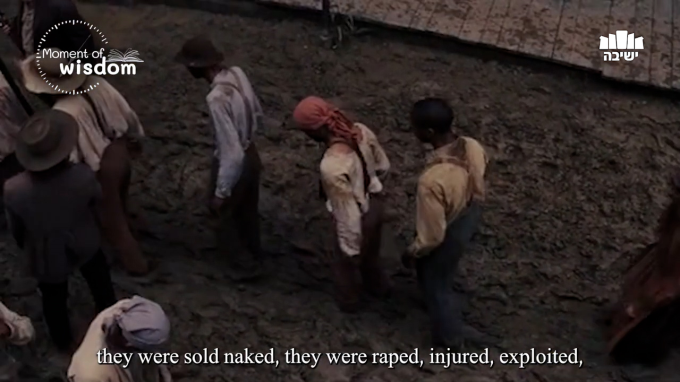
Mishpatim Illuminating the way for all mankind
Moment of Wisdom
The Torah teaches us how to behave with our slaves and by that guides us in ways that the world learns only years later.

Mishpatim Healing the Heart of Darkness
What happens when an anti-semite discovers he's A Jew, and What does this have to do with our Parshah?

Mishpatim Living by Torah
The Torah presents us with great moral principles and a profoundly unique value system. These are meant to propel us through life and make us feel that we are members of a kingdom of priests and a holy nation.

Mishpatim Weapons Of Mass Distraction
If the original sound of the giving of the Torah never fades, how come we don't hear it anymore?

Mishpatim May a Dayan Help the Poor in Beit Din?
We will try to explain in brief why the halachic system of litigation is preferable to the adversarial system, which is practiced in the government courts in Israel.

Mishpatim See you in Court
Parshat Mishpatim, the Torah portion called "laws" also calls judges "elohim" - God, masters or lords. What does this signify?