Vayikra
Text size
 What Do We Sacrifice?
 We would expect to read “when one of you offers a sacrifice.” Instead, it says “when one offers a sacrifice of you.” The essence of sacrifice is that we offer ourselves.
-
The Secret Love
...There are things that must be kept in Sod (Secret), and if someone reveals them, he thus abuses and wastes their greatness. One who has no secrets is one who is shallow and external - but 'Israel was redeemed from Egypt in the merit of not having revealed their inner secrets' (Midrash Tehillim 114,1)... -
The Clearest Sign That Redemption Is Near
Learning from our ancient sources the clearest sign that Redemption is near...and showing us the realization of the prophecy today! -
"The Land which ..the eyes of the Lord your God are always upon her"
In this week's Portion, the Torah describes the reaction of the People of Israel to the scourges which they suffered. It's amazing to see how we reacted during thousands of years, and how we react today…. with all of the strength and power that the Lord gave us. -
The Politics of Responsibility
A nation that sees itself as responsible for the evils that befall it, is also a nation that has an inextinguishable power of recovery and return. -
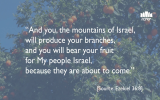
The Promise Of The Land
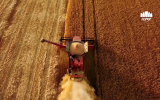
As long as Yisrael does not dwell on its Land, the Land does not give her fruits as she is accustomed. When she will begin to flower again, however, and give of her fruits, this is a clear sign that the end — the time of the Redemption — is approaching when all of Yisrael will return to its Land. -
Trauma, Teruma and Temura
“Temura” has the same letters of both trauma & Teruma: The trauma threatened by our enemies only leads to the Teruma, the contribution we bring to the world, & ultimately contributes to our triumph. Am Yisrael Chai! -
A Holy Book
This week's Torah reading marks the end of the book of Vayikra. It is a book about holiness, ritual holiness or Temple service, and also the holiness of human beings and human relationships. -
Peace Rather Than Tripping
It seems to me that the most painful part of the curse is its element of “a man … over his brother.” This is itself a great curse. -
Exploitation through compound interest
The Torah commands us to not take interest when we give a loan. We should try to revive this Mitzva and bring the Geulah. -
Inventing Religion
If you're going to make up a religion, you'd better not make promises you can't keep. Parshat Behar contains a huge promise that only the Creator could make.

")






Keep Reading...
<
12111098
>