YeshivaThe torah world Gateway
Beit Midrash
- Jewish Laws and Thoughts
- Personality Development
- Pathways in Personality Development

When it comes to matters which are subject to rabbinic dispute, the pious individual will follow the more stringent position and sway clear of all doubt or discrepancy. However, it is precisely here that a truly pious person must be on guard. He must be careful that his stringent practices do not lead him to belittle rabbis and Torah scholars who rule leniently, nor those who rely upon these lenient authorities.
A person's own stringencies are only matters of piety, but the prohibition against belittling Torah scholars is an actual and serious transgression. The difference between an ordinary and a top-rate ("mehadrin") kosher permit generally lies in a rabbinic dispute; belittling Torah scholars, on the other hand, is a full-fledged Torah prohibition. True piety calls for honoring all rabbis and venerating them, because honoring them is like honoring the Torah itself.

Pathways in Personality Development (52)
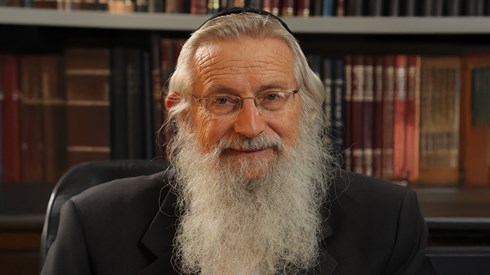
Rabbi Zalman Baruch Melamed
42 - 42. Fitting Admonition
43 - 43. Cautiously Stringent
44 - 44. Tales of the Sages
Load More
R' Tarfon said, "I was once walking along the road and I reclined in order to recite the 'Shema' in accordance with the opinion of the school of Shammai, thus exposing myself to the danger of robbers." They said to him, "You deserved to come to harm for acting against the words of the school of Hillel" (Mishnah, Berachot 1:3). They said this even though R' Tarfon behaved stringently in accordance with the school of Shammai.
Rabbi Moshe Chayim Luzzatto explains that there was a great dispute between the schools of Hillel and Shammai, and it was very trying for the Jewish people. Eventually the dispute ceased and it was decided that the law would follow the ruling of the school of Hillel forever. The existence of the Torah depends on this ruling remaining in effect forever and not losing its strength in the slightest, that the Torah not be split in two, Heaven forbid.
According to this Mishnah, then, the more pious path is to abide by the ruling of the school of Hillel. Ramchal concludes, "This should serve us as a guide to perceive the path where light resides with truth and faith for the doing of what is just in the eyes of God."
In the days of R' Kook, the Rebbe of Gur visited the land of Israel. These two rabbis met, R' Kook and the Rebbe of Gur, and during their meeting some untithed fruits of the Land of Israel were brought before the Rebbe of Gur in order to give him the privilege of separating terumot and ma'asrot (offerings and tithes).
R' Kook said to the Rebbe of Gur that because it was the first time he had ever fulfilled this commandment, he should bless "she'hecheyanu." The Rebbe, however, was of the opinion that he should not recite this blessing. They deliberated this matter for some time, and finally the Rebbe of Gur said, "If the Rabbi of Jerusalem says to bless, then this is what must be done," and he blessed "she'hecheyanu." This, then, is an example of true piety.



Rabbis in Midrash




















Lessons
fast navigation










Shlach Lecha "Why So Many Don't Make Aliya?" - Parshat Shlach
This short article deals with the weird phenomena that every single time Am Yisrael is meant to enter the Land of Israel, throughout the Tanach, 2nd Temple and until today, they "chicken out" and look for excuses. What's the problem with this mitzvah that proves so challenging. The article, based on sources, suggests that the difficulties of Eretz Yisrael is precisely her secret and beauty!
Kuzari -Rabbi Ari Shvat Kuzari class 4
The class deals with Islam and how the Muslim tries convincing the King of the Khazars, and why he was also rejected.
Beha'alotcha JEWISH STATE= GUIDE TO G-DLINESS & SELFLESSNESS
A Jewish State not only is a good idea, but educates us towards selflessness, altruism and G-dliness in our daily lives.
Ein Aya In Zion Even the Smoke of the Bark is Sweet
Just as Jewish nationalism is different from others, so too our capitol of Jerusalem is totally different than other national capitols. Rav Kook beautifully explains the passage in the Talmud that the trees of Yerushalayim were cinnamon trees.
Kuzari -Rabbi Ari Shvat Kuzari class 3
The second speaker invited to convince the Khazar King is the Christian, who presents their beliefs. Even before the questions of the King, "between the lines", the author R. Yehuda HaLevi already begins disproving them.
Ein Aya "Intimacy: Love, Life & Giving or Egocentric Taking & Expiration"
Today, many confuse between intimacy in marriage, based on love, giving and life which are diametrically opposed to empty "sex", pornography and prostitution which destroyed the Beit HaMikdash. The practical importance of clarifying this topic in today's western society is obvious, especially for young adults.
Kuzari -Rabbi Ari Shvat Kuzari class 2
The King of the Kazars, in his search for truth, starts by inviting the philosopher. This is a "crash-course" on Aristotelian philosophy and the reasons why the king is not convinced. Through this dialogue, R. Yehuda HaLevi already foreshadows some of his central ideas that will appear later.
Shavuot "Love of Torah = Love of Israel"- for Shavuot
People often identify Judaism as just a religion, but upon examination, we see, even halachically and explicitly in the siddur, that the Torah is dependent upon Am Yisrael, Jewish nationalism.
Ein Aya The Middle-Child & Anti-Tzni'ut Syndrome- Negative Attention
Although tzni'ut is for men just like women, Rav Kook deals here with the sources in Yishayahu and the Talmud which deals with the special problem of lack of tzni'ut in women's dress and actions, where it's not just a problem of midot and character traits, but also can include practical, social and national ramifications, as well, which caused the destruction of the Beit HaMikdash and exile from Israel. The class continues the previous one (Ayn Aya Shabbat vi, 29), and is a must for all educators and parents of high-school aged and young adults.

P'ninat Mishpat P'NINAT MISHPAT: A Mess of Loans, Repayments and Grievances – part II
based on ruling 83033 of the Eretz Hemdah-Gazit Rabbinical Courts
based on ruling 83033 of the Eretz Hemdah-Gazit Rabbinical Courts