Yeshiva
Beit Midrash
- Torah Portion and Tanach
- Vayikra
- Bechukotai
- Torah Portion and Tanach
- Vayikra
- Behar

The Torah study is dedicatedin the memory of
R. Avraham ben-tziyon ben shabtai
2. Holiness Fosters Mitzvoth
3. The Earth is the Lord's
Shmitta - Incumbent on the Person or the Land?
Of late some have asked the question as to whether the halachot of the Shmitta or Sabbatical year in Eretz Yisrael relate to the land itself or whether they are obligations on the person. From the Torah’s terminology, "the Land should have a rest (Shabbat) for God," - it would seem that the land itself requires a "rest." This issue has important legal ramifications: If the prohibited labors during Shmitta are directed at the Jew, one who instructs his non-Jewish worker to work his field has transgressed only a rabbinic prohibition; if, on the other hand, we are obliged to let the land itself rest, then one who hires a non-Jewish worker during Shmitta has transgressed a Torah prohibition - since, after all, the Land is not resting! The Minchat Chinuch discusses this matter and concludes that our main obligation is to let the land rest during Shmitta. According to this formulation, the Land of Israel has intrinsic holiness, and the mitzvoth (commandments) associated with the land are indicative of this holiness. Because of Eretz Yisrael’s holiness, the Master of the Universe commanded us to perform special commandments with regards to the land. Some mistakenly believe the opposite: namely, that the mitzvoth of the land give Eretz Yisrael its holiness.
Holiness Fosters Mitzvoth
The same principle applies to the Kohanim (Priests), whose special mitzvoth do not give them sanctity, but are rather a manifestation of their inherent sanctity. This holiness reflects itself in the need for the Kohen to refrain from confronting situations of ritual impurity and in the prohibition of him marrying a divorcee. Similarly, the holiness of the Land of Israel does not diminish in periods during which it is impossible to fulfill certain mitzvoth, since the land’s holiness is independent of those mitzvoth. Obviously, the more we perform mitzvoth of the Land, the more its holiness becomes apparent.
Since Eretz Yisrael’s holiness is inherent, many scholars assert that the mitzvah of dwelling in the Land is independent of its various special mitzvoth. The mitzvah of separating a portion of "Challah" from one’s dough (to be a Torah obligation, most Jews must be living in Eretz Yisrael), the mitzvoth of tithes, which according to the Rambam, are also contingent on most Jews living in Israel - are all not obligatory according to Torah law at present. Yet, the mitzvah of living in Israel remains intact.
The Earth is the Lord's
These matters are very straightforward, and this is probably why we rarely discuss them. Still, it is advisable to regularly review and deepen our understanding of them. We should study Israel’s holiness more intensely than ever - with a special accent on our Torah portion. Parshat Behar speaks in great depth about the mitzvoth of the land. In fact, Parshat Behar teaches us that everything is in God’s domain. Land, people, money - literally, everything! "The Land will not be sold for eternity," states the verse in Vayikra, "because I own the entire Land." The laws of Shmitta are not so much there to teach us the limitations on working the land in the seventh year, but rather to inform us that we are permitted to work the land in other years. The Land is God’s; He gave it to us as a "deposit" - with certain conditions. He allows us to work on the land for six years, but forbids us to do so in the seventh. God, as "Master of the House" - also forbids working the land in the fiftieth Jubilee year, or selling a piece of land forever. The land can be sold for only a set period of time, since it must remain divisible into the units designated by the Creator when the Jewish people entered the land.
Each time we partake of something in this world, we are using "God’s property." One who benefits from this world without permission is guilty of "Me’ila" - or misappropriation - of holy property. Blessings on food permit one to partake of this world. The Talmud in Berachot cites the verse "Hashem possesses the Land and everything in it" as referring the relationship between man and the world before one makes a blessing on food. After saying a blessing, the verse "the land was given over to man" is the rule of the day. Everything is Hashem’s. A person cannot even sell himself as a slave unless he has the permission of God - and even then, for a very short time. "They are my servants and not the servants of servants," says God.
We have spoken in the past of how after we liberated the Land of Israel and freed ourselves from the non-Jewish domination of the land, our service of God has changed as a result. We are no longer servants; no more are we subject to the burden of the rule of other nations, and our acceptance of the yoke of Heaven is now in our own hands. It is clear why we mention the theme of learning Torah as an introduction to Kriat Shma; when we ask God "to put into our hearts the ability to understand and comprehend, to listen, to learn and to teach, etc." But why do we mention the theme of Geulah - or redemption - prior to Shma? The answer: It is impossible to fully accept the yoke of Heaven upon ourselves as long as we are overwhelmed by pressures and influences of foreign powers. Therefore, before Shma - the acceptance of the kingdom of Heaven - we must pray to be relieved of the burden of non-Jewish nations, to be fully returned to our land.
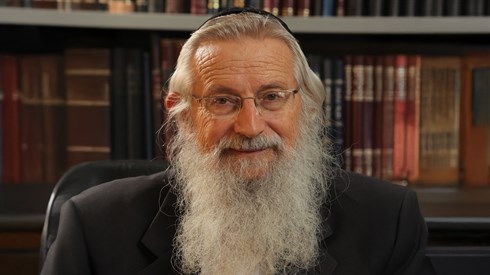







Rabbis in Midrash























Lessons
fast navigation










Hosha'ana Rabba FLYDUBAI & HOSHANA RABBA- ANI VAHU HOSHIA NA- I & HIM SAVE US
"Ani vaHu Hoshia Na", "I and Him, Save Us". We don't just pray to Him, but we also pray to and for ourselves that we should emulate and educate our children to have that instinctive altruism with which He created the world. President Trump seemed amused about Yaniv Hayon, our PLUMBER who confidently worked with G-d like Superman (he learned from a pilot on a TV show!) to save 174 lives on the Dubai hijacking, but we in Israel are totally accustomed already 78 years to our plumbers, teachers, garbage-men, rabbis, farmers & doctors being Hashem's shlichim! This is what Zionism is about.
Moreshet Shaul Hashem Is your Shadow – part I
Based on Siach Shaul, Pirkei Machshava V’Hadracha p. 420 – an address from 1941










