Yeshiva
Beit Midrash
- Torah Portion and Tanach
- Vayikra
- Kdoshim
- Torah Portion and Tanach
- Vayikra
- Achrei Mot

The Torah study is dedicatedin the memory of
R. Avraham ben-tziyon ben shabtai
2. Torah
3. Channeling, not Suppressing
The Zeal of Youth
"And God spoke to Moshe after the death of the two sons of Aharon in front of God..." Nadav and Avihu the sons of Aharon died specifically because of their desire to be too "close" to God; they symbolize the energies of youth, a younger generation motivated by raw, idealistic emotions. Occasionally, this energy manifests itself in the form of excessive haste not in keeping with the path of Torah.
Our sages teach us that Pinchas - who zealously killed Cozbi and Zimri for their illicit and threatening intimacy - was in fact a reincarnation of Nadav and Avihu. Similarly, Eliyahu the Prophet - we are taught - was also a reincarnation of Pinchas. In both the lives of Pinchas and Eliyahu, we find traces of pure energy, an emotion that prompts the people in question to accomplish "holy" tasks; such emotion, however, is not always balanced by a necessary dose of caution and cool-headedness.
Torah
In contrast, Moshe Rabeinu represents Torah, the orientation of "the elders" who, though they lack the enthusiasm of youth, behave calmly and cautiously, adhering to the Torah's guidance. Rabbi Avraham Yitzchak Kook [of blessed memory] cites sources indicating that both Moshe and Eliyahu are two key figures who in the future will announce the redemption of the Jewish people. According to Rav Kook, redemption will stem from a combination of wisdom deriving from age and learning - tempered by the enthusiasm of youth. Only a holistic approach that encompasses the two orientations - also taking into account the proper actions as indicated by Torah - will bring the redemption.
Channeling, not Suppressing
Rashi teaches that the meaning of the mitzvah, "You shall be holy" is: "Separate yourselves from sexual immorality". The commentary "Ohr Hachayim" explains that the inclination of sexual immorality (Yetzer d'Arayot) is entrenched in human nature, and is thus nearly impossible to overcome. If so, from where are we to garner the power to fulfill the mitzvah of "You shall be holy?" The response to this question, says the Ohr HaChayim, lies in the second half of the verse, "Because I, your God, am holy..." Since the Children of Israel are truly children of God, they possess a natural cleaving to Divine holiness.
There is no need to suppress the Yetzer d'Arayot. The Jewish person is expected to achieve spiritual perfection, and such perfection accomodates the Yetzer d'Arayot. Looked at this way, the prescription, "You shall be holy" is really a commandment to steer the inclination towards holiness and purity in a healthy direction. When we successfully do this, Rav Kook notes, we transform the Yetzer d'Arayot from a private, egoistic inclination to a universal inclination directed at the perpetuation of mankind and the furthering of God's plan for the world.
This observation - that we need not and should not suppress this inclination - has a calming effect; man realizes that he need not give up completely on his yearnings and drives. To be sure, it seems at times that it is easier to suppress the yetzer rather than to redirect it, since channeling this yetzer carries with it the possibility of failure and sin. However, suppressing the Yetzer d'Arayot is liable to produce a "boomerang effect" in which we confront the unruly, unhealthy bursting forth of the yetzer, unbridled by the guidance of Torah.
Our sages teach that after the first exile, Ezrah the prophet nullified the human inclination towards idolatry. At the time, he also tried to negate the Yetzer d'Arayot, but stopped short of doing so once he realized that it would lead to a situation in which there would be no chicken eggs in the entirety of the Land of Israel, as a result of the newly-celibate lifestyle of roosters and chickens!
From this observation, we can learn that the key to the redemption lies in the intensification of the Yetzer d'Arayot. It is possible that the way of overcoming this inclination is a long road, fraught with all sorts of personal challenges and mistakes. Yet, at the forefront of a person's thoughts at all times must be the realization that he is continuing down the path until complete victory over this yetzer.
We must overcome this yetzer in the same manner as we would overcome the tendency towards greed. Only when a person cultivates a sense of revulsion for money that is not his own, and a sense that money that is not rightfully his is a burden on him that will just not let him rest - is he considered to have overcome his greed. [Merchants in the marketplace know that there are people out there whom they can sell to on credit, since they know that the respective consciences of these people will not allow them to sleep at nights until they pay their debts.
A person must realize that each time he succeeds in a given struggle with the Yetzer d'Arayot, like the pushing off of a lewd thought or the like, not only has he refrained from committing a transgression, he has even performed a great mitzvah! Our sages teach that someone who remains idle and does not commit a sin, is considered by the Torah as if he in fact performed a positive commandment. This worldview generates a new sense of purpose to those who truly wish to vanquish this yetzer. The reason it is considered a mitzvah is that it requires an active struggle and an ability to draw upon one's spiritual powers.
Our sages teach that "according to the pain is the reward." Thus, one who exerts energies in these spiritual battles, and one who feels pain as a result of this exertion, receives great reward. We certainly do not serve God on condition of receiving reward, but the "reward" in this instance is the obtaining of new powers to aid in our service of God...
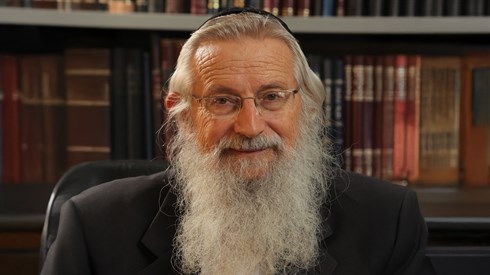


Ein Aya How Unclean Thoughts, Speech & Pornography Bring Depression & Loneliness
Ein Aya, Shabbat 2, 234






Rabbis in Midrash























Lessons
fast navigation









Various Events FOR WHOM NOT TO VOTE
Rav Zvi Yehuda Kook stressed that Israeli politics is G-dly, so I have no problem answering this common question on a Torani blog. Also, Free-Will is a G-d-given right and obligation, to "destine one's fate" (R. Soloveichik, Kol Dodi Dofek, 67), so I obviously don't tell others how to vote. But once not a few (especially young) have already asked, a couple of personal words from experience and thoughts from chazal & Rav Kook which may be of help to others, mainly for whom NOT to vote.

P'ninat Mishpat Fallout from Failure to Install Elevator – part II
based on ruling 85007 of the Eretz Hemdah-Gazit Rabbinical Courts







