Yeshiva
Beit Midrash
- Family and Society
- Redemption - Geula

The Torah study is dedicatedin the memory of
R. Meir b"r Yechezkel Shraga Brachfeld
Rabbi Hiyyah bar Abba said in the name of Rabbi Yochanan: "All of the Prophets, without exception, prophesized exclusively regarding the Messianic Age, yet concerning the World to Come, 'No eye has seen, besides yours Almighty.'" Shemuel disagreed, saying: "The only difference between our world and the Messianic Age is [Israel's] servitude to [foreign] kingdoms."
According to Rabbi Yochanan, then, all of the prophecies foretold by the Prophets concerning the future refer to the Messianic Age. For example: "And they will beat their swords into plowshares, and their spears into pruning hooks. Nation shall not lift sword against nation, neither shall they learn war any more," and, "The wolf also will dwell with the lamb, and the leopard will lie down with the kid," and, "Moreover the light of the moon will be like the light of the sun," all pertain to the days of the Messiah. If so, it follows that the nature of the world will change in messianic times, and earthly existence will be completely different from our present way of life. Shemuel, though, disagrees, contending that, "The only difference between our world and the Messianic Age is servitude to kingdoms."
A similar disagreement exists concerning the fate of man's free will in the Messianic Age. Will people continue to exhibit free will, or will this privilege be denied them, leaving those who failed to chose good before the arrival of the Messiah unable to mend their ways? Rabbi Shimon ben Elazar says: "Do as much as you are capable of, however much lends itself to being done, and while you are still able. As King Solomon in his great wisdom said: 'Remember your creator in the days of your youth, before the evil days come,' - This refers to old age. 'And the years draw near when you shall say, I have no pleasure in them.' - This refers to the Messianic Age, in which there is neither merit nor fault." Shemuel disagreed, saying: "The only difference between our world and the Messianic Age is [Israel's] servitude to [foreign] kingdoms, as the verse states: 'For the poor shall never disappear from the land.'"
So, according to Rabbi Shimon ben Elazar, in the Messianic Age there will be neither merit nor fault, for at that time the Kingdom of God will reveal itself and all will be witness to the great hand of God as it alters the laws of nature. All will desire to serve God, but this desire will not be the result of free will. There will therefore exist neither merit nor fault.
This is the reason that according to our tradition converts will no longer be accepted in the Messianic Age; the desire to convert will not be the result of one's free choice, but because of the advantages of being Jewish. Shemuel, though, again disagrees, contending that merit and fault will persist even in the Messianic Age. There will, says Shemuel, continue to be free will, for, "The only difference between our world and the Messianic Age is servitude to kingdoms."
It appears, then, that the Sages disagreed concerning in what sense messianic times will be different from our present world. Both opinions, though, may be accepted as legitimate, "Both are the words of the living God." Certainly Shemuel did not mean to imply that this would be the only change; he could not have believed that Israel's servitude to foreign kingdoms becoming a thing of the past and the establishment of an independent Jewish state would be the only difference, for he would most certainly agree that Jerusalem and her Holy Temple would be rebuilt in the Messianic Age.
Therefore, we can safely say that all are of the opinion that in the Messianic Age great changes will effect the world. Yet, the Sages disagreed concerning whether these changes would remain within the realm of the laws of nature, or whether they would take the form of miracles. The value of man's actions will also be effected, and they will no longer possess the sort of merit and fault that they did before the coming of the Messiah.
And because we are waiting for the arrival of the Messiah each day, "and, though he tarry, I wait daily for his coming," the book of Ecclesiastics states: "Remember your creator in the days of your youth, before the evil days come, and the years draw near when you shall say, I have no pleasure in them." In this vein, Judaism teaches that it is better to repent and perform good deeds an hour before it is too late.
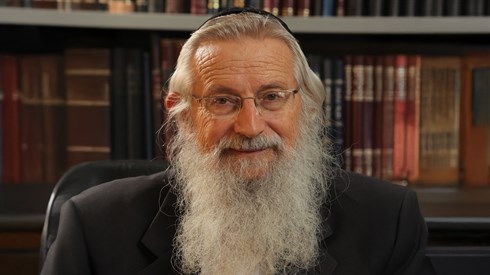







Rabbis in Midrash























Lessons
fast navigation










Various Events FOR WHOM NOT TO VOTE
Rav Zvi Yehuda Kook stressed that Israeli politics is G-dly, so I have no problem answering this common question on a Torani blog. Also, Free-Will is a G-d-given right and obligation, to "destine one's fate" (R. Soloveichik, Kol Dodi Dofek, 67), so I obviously don't tell others how to vote. But once not a few (especially young) have already asked, a couple of personal words from experience and thoughts from chazal & Rav Kook which may be of help to others, mainly for whom NOT to vote.

P'ninat Mishpat Fallout from Failure to Install Elevator – part II
based on ruling 85007 of the Eretz Hemdah-Gazit Rabbinical Courts









