Yeshiva
Beit Midrash
- Family and Society
- A Nation and its Halachot
- The Torah vs. Public Issues
- Family and Society
- Current Events
- Understanding Circumstances

The Torah study is dedicatedin the memory of
R. Avraham ben-tziyon ben shabtai
2. Why the Confusion?
3. The King's Second Torah Scroll
The Torah - Comprehensive Guidance
There are those who assert that rabbis should not get involved in politics - that they, in fact, should stay out of politics. The question, on a practical level, takes the following form: "Why is it that the forum known as 'The Rabbis of Judea and Samaria' expresses its opinion concerning the peace talks, autonomy, etc?"
When Rabbi Tzvi Yehudah Kook, zt"l, was asked his opinion regarding the involvement of rabbis in politics, he answered as follows: "Rabbis are obligated by the Torah to involve themselves in politics, and if they refrain from doing so they are guilty of betrayal. It is written in the Torah: 'Do not fear any man!'" Once, when, as a result of the words of Rabbi Tzvi Yehudah, a public commotion arose, and many claimed that rabbis should not deal in politics, Rabbi Tzvi Yehudah responded: "I am not asking anybody's permission. I am obligated by the Torah to proclaim and publicize that which is just and true. The political issues of the Community of Israel are themselves Torah. They are sacred."
The words of the Rabbi are to be understood literally, for the Torah shines forth, lighting up all of existence, and guiding us in all realms of life. There is no area of life which is beyond the guidance of the Torah. The Torah guides man in his clothing: Tzitzit , Sha'atnez ; in the building of his house: Mezuzah , Ma'akeh ; in diet and in travel, "While sitting in your home and walking along the way, when you retire and when you rise." For all situations and for all occasions, the Torah contains guidance concerning how to behave, how to live. And if, regarding personal and private matters the Torah provides complete guidance, what more so when it comes to matters which effect the greater Community of Israel, the nation in its entirety.
If this is the case, why is it that there are those who mistakenly believe that the Torah confines itself to the instruction of individuals, ignoring the larger issues of the entire people?
Why the Confusion?
It could be that this mistake is a result of our long exile, during the course of which the Jewish people lived under the rule of other nations. Because it was the non-Jews who ran the state and dealt with national issues, while the Jews lived as individual citizens, there was no need for expression of Torah opinion concerning national issues. As a result, one was liable to get the impression that the Torah does not encompass national issues.
Another possible reason for this mistake could be the tendency to equate Judaism with other religions, Heaven forbid.
Whatever the source of this mistake may be, it must be understood that the Torah includes guidance in all areas, public and private; therefore, it is the obligation of every Torah scholar and Rabbi to give voice to the opinion of the Torah and to guide the public according to its laws. It is forbidden for a rabbi to be fearful of making himself heard, even if he suspects that his words will awaken opposition. Concerning this the Torah says, "Do not fear any man!" The issues surrounding the settlement of, and Jewish rule in the Land of Israel are clearly Torah related issues, and every rabbi must act in any way possible to bring about the fulfillment of the Torah commandment to "...inherit the Land and settle it" (Deuteronomy 11:31), and to warn others concerning the prohibition: "Do not grant them a settlement [in the Land]" (Rashi on Deuteronomy 7:2). What's more, one need also take into account the Torah law regarding situations of life-threatening danger.
The Rabbis of Yesha (Judea and Samaria), then, are doing the right thing when they demand strengthened control of the IDF in Yesha, and the invigoration of settlement in both Yesha and in the entire Land of Israel. They are behaving in perfect accordance with Jewish law when they involve themselves in these Torah issues - which some refer to as "political issues."
The King's Second Torah Scroll
Concerning our question, Rabbi Abraham Isaac HaCohen Kook wrote: "Just as the entirety of the Community of Israel embodies Holiness, so must the rule of its kingdom be in accordance with the Torah. For this reason [Jewish law decrees that] a king must possess two Torah scrolls - one, just like any other Jew, and a second, in order to learn the proper way to run a kingdom."
While every Jew is obligated to write one Torah scroll for himself, the King of Israel is commanded to write two: the first, in keeping with the law which applies to every Jew; the second, a special Torah scroll from which the king is expected to learn how to run the kingdom. Rabbi Kook adds that it was the Sadducees who opposed the Torah's prescribing how the kingdom must be run. They denied both the sanctity of the Community of Israel, and sanctity of the Oral Torah; they wished to be similar to the other nations, a mere national collective without the holiness of the People of Israel and without the holiness of the Oral Torah.
We may gather from the words of Rabbi Kook that, while the laws of the larger Jewish community are indeed distinct and demand a separate Torah scroll, even the rule of the Jewish masses must be in keeping with the Torah. There is a Mishna in the tractate of Sanhedrin that states that regarding national questions - for example, the declaration of war - the Sanhedrin must be consulted; the opinion of the Torah must be heard. Indeed, when it comes to issues which effect the larger Community of Israel, the greatest Torah authority possible must be consulted. On issues of such magnitude an individual Torah scholar is not permitted to decide. A great Sanhedrin, consisting of seventy-one scholars is needed.
For this reason, today it remains the obligation of the generation's great Torah scholars to express their opinion - the opinion of the Torah - regarding all questions which effect the entire Community of Israel and the wholeness of the Land of Israel. Concerning great and central questions today's Torah giants are called upon express their opinion through balanced judgement and much consultation. The power of the majority of the generation's Torah scholars is similar to the power of the Sanhedrin itself. Concerning this it is written: "You must go to the Levitical priests and to the judge that exists in those days." That is, "You have no one else except the judge who lives in your days " (Deuteronomy 17:9; Tractate Rosh Hashanah 25b). In addition, the Talmud teaches that "you must be careful to do all that they instruct you; do not stray from that which they teach you to the left or the right." There is no power in the world that can suppress the words of Torah scholars and prevent them from voicing their opinion concerning public questions. Any attempt to quiet Torah scholars will meet its end shattered upon the steel wall of Torah issues, for the word of God will stand forever.
---------
Glossary:
Torah - The Five Books of Moses
Tzitzit - Tassels on the corners of a Jew's garments
Sha'atnez - Forbidden mixture of wool and linen
Mezuzah - Torah verses fixed to doors of Jewish houses
Ma'akeh - Protective railing on the roof of a Jew's house
Mishna - Codified version of Oral Jewish Law
Sanhedrin - The Supreme Court of Jewish scholars in the Second Commonwealth
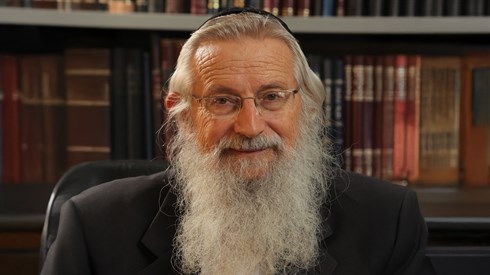






Rabbis in Midrash























Lessons
fast navigation









Various Events FOR WHOM NOT TO VOTE
Rav Zvi Yehuda Kook stressed that Israeli politics is G-dly, so I have no problem answering this common question on a Torani blog. Also, Free-Will is a G-d-given right and obligation, to "destine one's fate" (R. Soloveichik, Kol Dodi Dofek, 67), so I obviously don't tell others how to vote. But once not a few (especially young) have already asked, a couple of personal words from experience and thoughts from chazal & Rav Kook which may be of help to others, mainly for whom NOT to vote.

P'ninat Mishpat Fallout from Failure to Install Elevator – part II
based on ruling 85007 of the Eretz Hemdah-Gazit Rabbinical Courts










