Yeshiva
Beit Midrash
- Shabbat and Holidays
- Shabbat
- The spiritual view

Shabat is the Jewish affirmation that we live in a universe created and sustained by Divine Will. This is the supreme religious value which Shabat represents. As we come to understand more of the physical laws that govern our universe, the Jew is strengthened in this belief in a created universe and in the presence of a Creator. Einstein famously said in regard to his search for underlying general theories that would explain the behavior of the physical universe: "God does not play with dice." Even though one is privileged to believe whatever one wishes - this is the Jewish idea of bechira chafshith - nevertheless the existence and the observance of Shabat for thousands of years stands as strong testimony and eternal belief in created world and not in randomness or pure chance. To affirm this concept of created and Creator, we are given laws and behavior patterns that sanctify and separate this day of Shabat from all other days and mundane functions. Shabat becomes a day of testimony to creation and to eternity - the twin pillars of Jewish belief. It is not accidental at all therefore that Shabat observance is the dividing line in halachic rulings between Jewish continuity and eventual assimilation and loss. Though Shabat observance per se does not guarantee Jewish family success in all instances, it is clear that Shabat non-observance opens the door wide to the free fall of assimilation, intermarriage and self-hatred that is unfortunately rampant in today’s Jewish world. The words of Achad Haam that "More than the Jews guarded the Shabat, the Shabat guarded the Jews" have never rung more true than today.
The other underpinning value of Shabat is to remind of our own uniqueness as a people with a mission and a destiny. Though Judaism taught the world about the gift of a day of rest during the week, the particularity of observance of this day of rest has remained uniquely and exclusively Jewish. This is what all the laws and rituals are all about. Hillel said that "If I am not for myself - particular and exclusive - than what am I?" That is one of the great aspects of Shabat - it is about ourselves, our past, our tradition and hopes. It awakens within us our sense of uniqueness and self-worth. We have shared the idea of a day of rest with all of humankind for "If I am only for myself, then again what am I?" But Shabat has remained only ours for it exemplifies the supreme value of the combination of Jewish particularism and universality that is so characteristic of Torah and Judaism. To retain this value, laws, ritual, behavior patterns are required in order to give actual life to otherwise lofty but theoretical values. Thus Shabat as a basic Jewish value lives on through our observances and appreciation of that holy day.
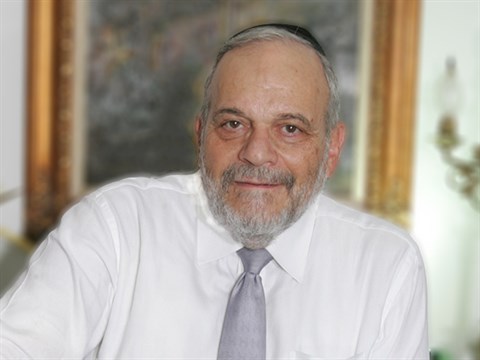






Rabbis in Midrash























Lessons
fast navigation










Hosha'ana Rabba FLYDUBAI & HOSHANA RABBA- ANI VAHU HOSHIA NA- I & HIM SAVE US
"Ani vaHu Hoshia Na", "I and Him, Save Us". We don't just pray to Him, but we also pray to and for ourselves that we should emulate and educate our children to have that instinctive altruism with which He created the world. President Trump seemed amused about Yaniv Hayon, our PLUMBER who confidently worked with G-d like Superman (he learned from a pilot on a TV show!) to save 174 lives on the Dubai hijacking, but we in Israel are totally accustomed already 78 years to our plumbers, teachers, garbage-men, rabbis, farmers & doctors being Hashem's shlichim! This is what Zionism is about.











