Yeshiva
Beit Midrash
- Jewish Laws and Thoughts
- Personality Development
- Pathways in Personality Development

The Torah study is dedicatedin the memory of
Rachel Bat Asher
The fear of God's exalted nature is achieved by dwelling upon the greatness of the Almighty and His loftiness. Such thoughts elevate a person and fill him with awe. One understands that the divine greatness cannot be described or even grasped, for the Almighty is transcends all blessing and praise, He is beyond all forms of perfection that man's mind can envision and comprehend. No human mind, no matter how great, is capable of grasping Him. He is greater than man can possibly imagine. "To whom then will you liken me, that I should be his equal? said the Holy One" (Isaiah 40:25).
This dwelling upon God's greatness by man causes adoration, excitement, a desire to get close to this greatness, to become engulfed in it, nullified by it. Not a nullification of cessation, but a nullification that magnifies a person. One becomes erect and filled with the divine light. He himself is nullified as he merges with the divine greatness. Fear of God's exalted nature is the fear which man longs for, thirsts for.
Pathways in Personality Development (52)
Rabbi Zalman Baruch Melamed
35 - 36. The Adornment of Religious Performance
36 - 35. Fear of God's Exalted Nature
37 - 37. Piety and the Love of God
Load More
This is true fear of Heaven, and it is necessary for people who experience difficulties in serving God. But for spiritual people with refined character traits fear of God's exalted nature is fitting, fear based upon adoration: "A God that is mighty in the great council of the holy ones and greatly feared of all who serve Him" (Psalms 89:8).
Such fear must accompany all of man's worship. It must spread from the mind to the heart, from the intellect to the emotion, until it reaches the senses, to the point that one sees himself when he prays or carries out commandments as if he were actually standing in the presence of the Creator. By pondering and internalizing this, one slowly begins to feel as if he actually stands before the Almighty, prays in His presence and makes requests of Him in person. One senses that the Almighty truly hears his prayers and requests.
When such fear fills the heart, it spreads and influences a person's behavior. When a person constantly sees God before him - "I have set the Lord always before me" (Psalms 16:8) - he behaves accordingly. Fear is discernible in everything he does - when he stands, walks, prays. The sage Rava would place his hands upon his heart when praying, like a servant before his master, with fear and trepidation. Rav Huna would put on appropriate clothes before praying. He said, "Prepare to meet your God."
In sum: Fear is one of the pillars upon which divine service rests, and the chief aspect of the fear of God is the fear of His exalted nature.
---
Some of the above translation was taken from or based upon Feldheim's "The Path of the Just," and from Davka's Soncino Judaic Classics Library (CD-Rom).
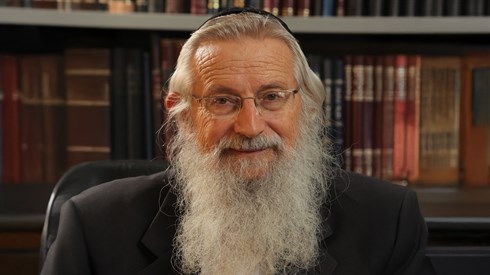





Rabbis in Midrash























Lessons
fast navigation










Hosha'ana Rabba FLYDUBAI & HOSHANA RABBA- ANI VAHU HOSHIA NA- I & HIM SAVE US
"Ani vaHu Hoshia Na", "I and Him, Save Us". We don't just pray to Him, but we also pray to and for ourselves that we should emulate and educate our children to have that instinctive altruism with which He created the world. President Trump seemed amused about Yaniv Hayon, our PLUMBER who confidently worked with G-d like Superman (he learned from a pilot on a TV show!) to save 174 lives on the Dubai hijacking, but we in Israel are totally accustomed already 78 years to our plumbers, teachers, garbage-men, rabbis, farmers & doctors being Hashem's shlichim! This is what Zionism is about.
Moreshet Shaul Hashem Is your Shadow – part I
Based on Siach Shaul, Pirkei Machshava V’Hadracha p. 420 – an address from 1941











