Yeshiva
Beit Midrash
- Sections
- Peninei Halakha
- Shabbat and Holidays
- Laws of Hanukkah
- Peninei Halkha - Hanukkah

Everything in the world is fleeting and ultimately perishable. This is true of ideas and memories as well; they lose their strength and vitality over time. However, when it comes to lighting the Ĥanuka candles, we discover that faith in God never wanes. On the contrary, it continues to exist and even thrive, despite the hardships and surrounding darkness. The pure spirituality expressed in the Torah is eternal; therefore, it constantly increases. Other, more transient ideas, however, fade away and expire. Affectionately embracing this wondrous idea, the entire Jewish people fulfills the mitzva of lighting Ĥanuka candles in the most exemplary manner possible, mehadrin min ha-mehadrin, adding a candle each night until the final night when eight candles are lit.
It is well known that the number eight alludes to the metaphysical, the supernatural. The world was created in seven days, and there are seven days in a week, so the number eight indicates that which lies beyond nature. For example, the purpose of brit mila is to rectify and elevate nature to a higher level, and therefore it is performed on the eighth day from birth. The Torah, as well, belongs to the eighth level, as it serves to elevate nature to a divine level. This is why the Torah was given after the seven-week omer period, which represents the wholeness of nature. After the seven weeks of the omer, we rise to a level above nature – the festival of Shavu’ot, when the Torah was given. Similarly, we complete the annual Torah-reading cycle on Shemini Atzeret (the eighth day from the beginning of Sukkot), which is also called Simĥat Torah (in Israel).
Ĥanuka, too, belongs to the realm of the supernatural, as it reveals the lofty stature of the Oral Torah. Therefore, we light candles for eight nights, adding a new candle each night.6
See Maharal’s Tiferet Yisrael, ch. 2, 25, and Ner Mitzva p. 23. The Greeks’ worldview stemmed from nature, and since there are different forces in nature, they believed in multiple gods. In addition, since nature has no values, only strength, beauty, and external wisdom, they yearned for these things. In contrast, Judaism is based on the belief in one God, who created nature but who Himself transcends it. The goal is to discover God’s oneness in the world, to reveal the image of God within man through morals, the Torah, and the mitzvot. The Greeks cannot coexist with us, because our belief in one God and our ethical values undermine the foundation of their worldview. Judaism, however, can coexist with Greek culture and use it as a tool for research, classification, and the revelation of Jewish concepts. For more on this notion, see Bina Le-itim 1:25-27.↩︎
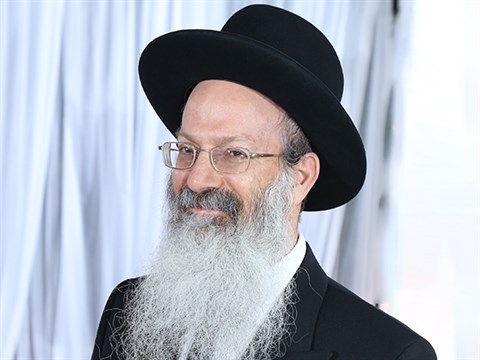
Rabbi Eliezer Melamed

Peninei Halakha 18. Torah Verses in the Prayers and in the Berakha of She-asa Li Kol Tzorki
Chapter 10: The Laws of Tisha Be-Av
The Laws of Purim 15. Scheduling the Se’uda when Purim is on Friday
Chapter 16: The Mitzvot of Joy and Kindness





Rabbis in Midrash





























Moreshet Shaul Hashem Is your Shadow – part I
Based on Siach Shaul, Pirkei Machshava V’Hadracha p. 420 – an address from 1941

P'ninat Mishpat A Non-Contractor in Changing Times – part I
(based on ruling 85128 of the Eretz Hemdah-Gazit Rabbinical Courts)
Moreshet Shaul Our King on Rosh Hashana, Our Father on Yom Kippur.
Based on Aroch Siach, p. 221 (Rav Shaul Yisraeli)
P'ninat Mishpat A Non-Contractor in Changing Times – part II
(based on ruling 85128 of the Eretz Hemdah-Gazit Rabbinical Courts)
Moreshet Shaul Hashem Is your Shadow – part II
Based on Siach Shaul, Pirkei Machshava V’Hadracha p. 420 – an address from 1941
Parashat Hashavua Happiness for the Right Reasons
[With painful longing, we share these divrei Torah from our co-Rosh Kollel for close to 40 years, Harav Moshe Ehrenreich zt”l.]