Yeshiva
Beit Midrash
- Sections
- Peninei Halakha
- Shabbat and Holidays
- The Three Weeks
- The Laws of Three Weeks

We eat meat and drink wine on Shabbat Ĥazon, as we do on every other Shabbat of the year. After all, even if Tisha Be-Av itself falls out on Shabbat, causing the fast to be postponed to Sunday, one may eat meat and drink wine on that Shabbat; one may even serve a meal as lavish as that of King Solomon in his time, since there is no mourning on Shabbat (sa 552:10).
In addition, one may taste the meat dishes that one prepares in honor of Shabbat Ĥazon, to see if they need additional seasoning. This is because the purpose of this tasting is not to enjoy, but rather to prepare for the mitzva of oneg Shabbat (making Shabbat a delight).
Similarly, one may eat meat and drink wine at a se’udat mitzva, such as a meal in honor of a brit mila, a pidyon ha-ben, or a siyum. One may also eat meat and drink wine at a bar mitzva celebration, provided that it takes place on the day the boy becomes obligated in mitzvot (see above, section 3).
There are divergent customs, however, regarding the number of people one may invite to such a meal. Some say that during the Nine Days one must limit the number of people one invites to the celebrants plus an additional minyan of ten men. Others maintain that one may invite all the people whom he would have invited had the meal occurred a different time. According to Rema, during the Nine Days, until Shabbat Ĥazon, one may invite anyone he would normally invite, but during the week of Tisha Be-Av, one should invite only a minyan of men, in addition to the celebrants. In practice, the halakhic ruling in practice varies according to the circumstance and the need.
The Aĥaronim write further that one should not intentionally schedule a siyum for the Nine Days, in order to permit the consumption of meat and wine, as this is a willful abrogation of the mourning over the Temple. Rather, only one who happens to complete a unit of Torah study during the Nine Days, in the course of his regular studies, may organize a festive siyum meal, provided that he usually does so when celebrating a siyum similar to this one (mb 551:73).[11]
[11] Regarding the number of people one may invite to a se’udat mitzva: See Torat Ha-mo’adim 5:49, which summarizes the three opinions and rules in accordance with the most lenient one. mb 551:77 and Kaf Ha-ĥayim 551:165 indicate that there are two opinions regarding what it means to limit the number of guests. According to Levush, it means inviting ten people in addition to those who are actually celebrating the event and their relatives (close enough that they may not testify for or against them in court); one must follow this practice throughout the Nine Days. Rema, on the other hand, rules stringently only during the week of Tisha Be-Av, but during that period he rules even more stringently than Levush does, stating that in addition to the celebrants themselves, one may invite only enough people to complete a minyan, including relatives. Kaf Ha-ĥayim further states, citing Ben Ish Ĥai, that some people have a custom not to eat meat or drink wine even at a se’udat mitzva. Instead, they eat fish and serve other drinks, in order to avoid uncertainty regarding who may be invited. One certainly recites Birkat Ha-mazon over wine after a se’udat mitzva. Ĥabad Ĥasidim customarily celebrate siyumim specifically during the Nine Days, and they invite as many people as possible to the festive siyum meal, claiming that rejoicing over the Torah and increasing camaraderie are restorative. However, their opinion was not accepted in practice. In practice, the summer session in yeshivot ends on Tisha Be-Av, which means that the students usually complete the tractate that they study in that session during the Nine Days. But this is not done in order to cancel the mourning; therefore, the yeshiva may serve a distinguished meal, as befits the completion of a tractate that the students studied for an entire session.
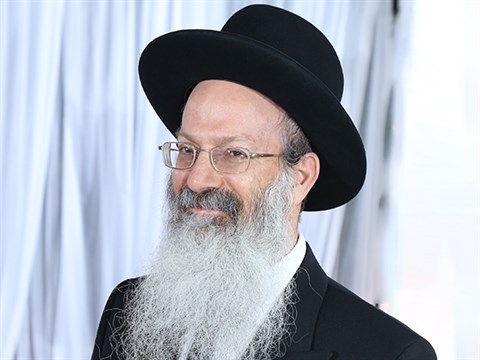
Rabbi Eliezer Melamed

Peninei Halakha 18. Torah Verses in the Prayers and in the Berakha of She-asa Li Kol Tzorki
Chapter 10: The Laws of Tisha Be-Av





Rabbis in Midrash
































Various Events FOR WHOM NOT TO VOTE
Rav Zvi Yehuda Kook stressed that Israeli politics is G-dly, so I have no problem answering this common question on a Torani blog. Also, Free-Will is a G-d-given right and obligation, to "destine one's fate" (R. Soloveichik, Kol Dodi Dofek, 67), so I obviously don't tell others how to vote. But once not a few (especially young) have already asked, a couple of personal words from experience and thoughts from chazal & Rav Kook which may be of help to others, mainly for whom NOT to vote.

P'ninat Mishpat Fallout from Failure to Install Elevator – part II
based on ruling 85007 of the Eretz Hemdah-Gazit Rabbinical Courts








