Yeshiva
Beit Midrash
- Sections
- Peninei Halakha
- Shabbat and Holidays
- The Three Weeks
- The Laws of Three Weeks

As we have learned, the custom among Ashkenazim and some Sephardim is to refrain from cutting one’s hair during the entirety of the Three Weeks. Regarding shaving one’s beard, however, a question arises.
According to many poskim, there is no difference between cutting one’s hair and shaving; both are forbidden throughout this period (Kaf Ha-ĥayim 551:66, 493:19). This is the custom of most yeshiva students and those who observe mitzvot meticulously.
However, some maintain that it is proper, le-khatĥila, to shave every Friday in the period before the first of Av (based on ma and Pri Megadim). Others permit one to shave every day until the first of Av, since doing so does not entail any joy. According to them, the custom not to cut one’s hair applies only to haircuts, which are a somewhat happy occasion, and not to shaving, which is only the removal of unsightly facial hair and entail no joy. One who is lenient in this regard has an opinion to rely on, and others should not rebuke him. This is especially true in Israel, where Jews of all backgrounds live side by side, and most Sephardim are lenient regarding this issue. In addition, when there is an uncertainty regarding the Ashkenazic custom, one may take the Sephardic custom into account. In practice, everyone should follow his father’s custom – whether it is lenient or strict – to avoid disrespecting him.
However, starting on Rosh Ĥodesh Av, it is clear that according to both Ashkenazic and Sephardic custom one should not shave, even in honor of Shabbat Ĥazon. According to all opinions and customs, one may not cut one’s hair during the week in which Tisha Be-Av falls, nor is there any allowance to shave.[7]
[7] Regarding shaving during the Three Weeks: ma 551:14 states in the name of Hagahot Asheri that according to Ashkenazic practice one should not cut one’s hair even before Shabbat, because people do not usually cut their hair every week. This implies that those who shave regularly may shave in honor of Shabbat. Pri Megadim, Eshel Avraham 551:14 similarly states that one may cut one’s hair for the sake of Shabbat before the first of Av. While Mateh Yehuda 551:4 rules stringently, Pri Megadim’s opinion seems more correct in the case of shaving, because one who refrains from shaving looks unsightly on Shabbat. See also bhl 551:3, which states that the Yerushalmi indicates that one may cut one’s hair in honor of Shabbat even during the Nine Days. R. Akiva Eger concurs. Another reason to be lenient is that those who shave regularly generally feel great distress when they go several days without shaving. Perhaps this is similar to cutting mustache hairs that interfere with eating, or applying ointment on Tisha Be-Av, which is permitted for one who suffers from head sores (sa 554:15). It also coincides with the ruling that I heard, that one may cut hairs that cause sores or headaches. In Nefesh Ha-Rav, R. Hershel Schachter writes in the name of R. Yosef Dov Soloveitchik that the Three Weeks have the same status as the year-long mourning period for a deceased parent, during which shaving is permissible; the customs of the Nine Days are like those of the shloshim period over the death of a close relative, when shaving is prohibited; and Tisha Be-Av is equivalent to shiva. Based on this, he permits shaving every day, until the first of Av, because not doing so makes one look disgraceful. See Tzohar, vol. 3, p. 39, where R. Soloveitchik’s opinion is challenged, but these challenges can be rejected. Also see Responsa Ner Ezra, vol. 2, pp. 155-158, which concludes that one may shave before Shabbat, stating that this is the opinion of R. Shlomo Min-Hahar and R. Aharon Lichtenstein.
However, many poskim rule stringently, forbidding shaving altogether. So states Kaf Ha-ĥayim 551:66. Kaf Ha-ĥayim 493:19 quotes Aĥaronim who state that one may shave if refraining from shaving will cause a loss of income. Most people who observe the mitzvot meticulously follow this viewpoint. Igrot Moshe, oĥ 4:102 also only allows shaving in order to avoid monetary loss.
In my humble opinion, it seems that technically, it is proper even for those who follow Ashkenazic custom to shave every Friday, until the first of Av. On other days of the week, however, it is preferable to be stringent. Nevertheless, one who is lenient has an opinion to rely on. One may be lenient to maintain his livelihood as well. Starting from the first of Av, it is proper to be stringent, both throughout the week and on Friday. Even though one could argue that it is imperative to shave in honor of Shabbat – as the Yerushalmi and R. Akiva Eger imply, as cited in bhl 551:3 – nevertheless, we find in the writings of the Rishonim (Kol Bo, cited in Beit Yosef 551:4) that it is customary to refrain from shaving before Shabbat Ĥazon, so that we enter Tisha Be-Av as mourners. We also find that the prevalent Ashkenazic custom was to refrain from wearing Shabbat clothes on Shabbat Ĥazon, as Rema 551:2 states. Even though we do not follow this custom, we can still learn from it that according to Ashkenazic practice, one need not be so meticulous about the honor of Shabbat Ĥazon. Therefore, during the Nine Days, it is better to refrain from shaving before Shabbat. In my humble opinion, it is proper to recommend to Sephardim that they, too, refrain from shaving during the Nine Days. Firstly, this is the law for those who forbid haircuts throughout the Three Weeks (Jews from Morocco and Djerba, and those who follow Arizal’s customs; Tunisian and Algerian Jews avoid haircuts starting from the first of Av). In addition, we find that this was the Sephardic custom, as cited in Kol Bo (by R. Aharon of Lunel, which is in Provence), that one must enter Tisha Be-Av in a disgraceful state. Today, the most prevalent sign of mourning is being unshaven, and, conversely, shaving is a tangible expression that one is not mourning. Therefore, it is proper to display this sign of mourning during the Nine Days and on Tisha Be-Av. Furthermore, it is proper to minimize discord, when possible. Accordingly, several contemporary authors write that Sephardim studying in Ashkenazic yeshivot should adopt Ashkenazic stringencies (Yeĥaveh Da’at 4:36). Even though today’s yeshivot in our communities are not Ashkenazic or Sephardic per se, but are open to students of all backgrounds, it is preferable, when possible, to minimize variation of customs. Therefore, when it comes to shaving for Shabbat before the first of Av, it is preferable to follow the custom of most Sephardim, who shave during the Three Weeks. During the Nine Days, however, it is better to follow the custom of Ashkenazim and some Sephardim, who do not shave. Nonetheless, one should not rebuke one who wants to rely on the logic found in bhl and follow the custom of the Sephardim who shave in anticipation of Shabbat Ĥazon. During the week of Tisha Be-Av, however, everyone agrees that one may not shave.
Practically speaking, I heard proper guidance from R. Naĥum Rabinovitch, the rosh yeshiva of Yeshivat Birkat Moshe in Ma’aleh Adumim. He suggests that everyone follow his own father’s custom, to avoid a situation in which a father is shaven during the Three Weeks and his son is not, or vice versa, as this could be an affront to the father’s honor. I would add that if the father follows the more stringent custom, there is reason to be concerned that if his son shaves, people will think that he is doing so for reasons of convenience, and not for the sake of Shabbat, which will result in an affront to God’s honor. Furthermore, one should not ignore the fact that one who refrains from shaving for three weeks demonstrates that observing Jewish customs is very important to him, and by doing so he sanctifies God’s name. See above ch. 3 n. 9.
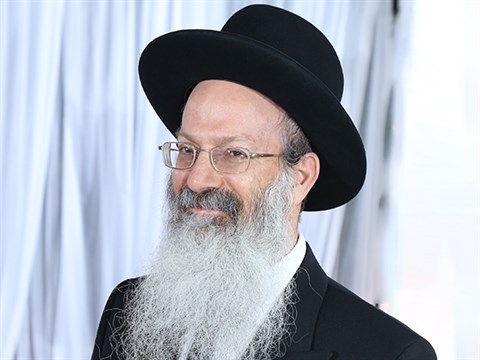





Rabbis in Midrash

































Hosha'ana Rabba FLYDUBAI & HOSHANA RABBA- ANI VAHU HOSHIA NA- I & HIM SAVE US
"Ani vaHu Hoshia Na", "I and Him, Save Us". We don't just pray to Him, but we also pray to and for ourselves that we should emulate and educate our children to have that instinctive altruism with which He created the world. President Trump seemed amused about Yaniv Hayon, our PLUMBER who confidently worked with G-d like Superman (he learned from a pilot on a TV show!) to save 174 lives on the Dubai hijacking, but we in Israel are totally accustomed already 78 years to our plumbers, teachers, garbage-men, rabbis, farmers & doctors being Hashem's shlichim! This is what Zionism is about.
Moreshet Shaul Hashem Is your Shadow – part I
Based on Siach Shaul, Pirkei Machshava V’Hadracha p. 420 – an address from 1941

P'ninat Mishpat A Non-Contractor in Changing Times – part I
(based on ruling 85128 of the Eretz Hemdah-Gazit Rabbinical Courts)
Moreshet Shaul Our King on Rosh Hashana, Our Father on Yom Kippur.
Based on Aroch Siach, p. 221 (Rav Shaul Yisraeli)







