Yeshiva
Beit Midrash
- Sections
- Peninei Halakha
- Shabbat and Holidays
- Jewish Holidays
- Lag Ba'omer

Many people had a custom to throw expensive clothing into the bonfire at Meron, explaining that they do so in honor of R. Shimon bar Yoĥai. There are even testimonies that great rabbis followed this practice. On the other hand, some authorities are skeptical about this practice, claiming that it has no basis and, worse, that it is forbidden because of bal tashĥit (the prohibition against destroying things needlessly). It is true that people used to burn the king’s clothes after his death, but that was because no one else may use them, out of honor for the king. Here, however, why should we burn clothing for no reason (Sho’el U-meshiv, 5:39; Ĥikrei Lev, Mahadura Batra, yd 11)? Others try to justify the custom, saying that one transgresses the prohibition of bal tashĥit only when destroying something for truly no reason, but if there is a purpose, like honoring R. Shimon bar Yoĥai, it is permissible (see Torah Li-shmah §206). In practice, if one’s ancestors did not follow this practice, it is inappropriate for him to observe such a disputed custom. But if one's ancestors had the custom to burn clothes, one may rely on the poskim who justified the custom. Nevertheless, it is preferable to donate the value of the clothing to charity than to destroy them in a fire.
When going to pray at the gravesites of saints and sages, one must be careful not to turn toward them in prayer, because we are commanded to pray to God alone. Anyone who prays to a saint violates a prohibition and is similar to one who engages in necromancy, which the Torah forbids (Devarim 18:11). Some authorities permit one to turn to a deceased saint to ask him to intercede before the Exalted One on behalf of those who pray at his grave (Pri Megadim, Eshel Avraham 581:16). Others, however, prohibit this, because this too has elements of necromancy. Rather, we must direct all of our prayers exclusively to the Master of the Universe, without involving any intermediaries. One who is praying to God may ask Him to accept his prayers in the merit of a particular sage or saint (Maharil, Taz 581:39), because when we connect to the Torah teachings and good deeds of a righteous person, we become better, more perfect people, and in that merit we ask God to accept our prayers.
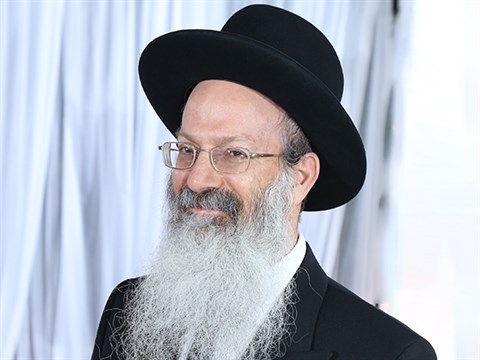
Rabbi Eliezer Melamed

Peninei Halakha 18. Torah Verses in the Prayers and in the Berakha of She-asa Li Kol Tzorki
Chapter 10: The Laws of Tisha Be-Av





Rabbis in Midrash
































Various Events FOR WHOM NOT TO VOTE
Rav Zvi Yehuda Kook stressed that Israeli politics is G-dly, so I have no problem answering this common question on a Torani blog. Also, Free-Will is a G-d-given right and obligation, to "destine one's fate" (R. Soloveichik, Kol Dodi Dofek, 67), so I obviously don't tell others how to vote. But once not a few (especially young) have already asked, a couple of personal words from experience and thoughts from chazal & Rav Kook which may be of help to others, mainly for whom NOT to vote.

P'ninat Mishpat Fallout from Failure to Install Elevator – part II
based on ruling 85007 of the Eretz Hemdah-Gazit Rabbinical Courts








