Yeshiva
Beit Midrash
- Sections
- Peninei Halakha
- Shabbat and Holidays
- The Tenth of Tevet
- Yom Hakaddish Haklali

In 1959, the Knesset legislated that the 27th of Nisan shall be Martyrs’ and Heroes’ Remembrance Day:
to meditate on the memory of the Holocaust, which the Nazis and their collaborators perpetrated against the Jewish people and of the acts of heroism and revolt performed in those days.… Throughout the state shall be a two-minute silence, during which all work and all road traffic shall be suspended; there shall be memorial gatherings, popular rallies, and commemorative functions in army camps and educational institutions; flags on public buildings shall be flown at half-mast; broadcasts shall express the special character of the day.
The two minutes of silence take place at 11:00 a.m., after which the official ceremonies begin.
However, unlike Yom Ha-zikaron, to which the Chief Rabbinate consented, the Torah sages at the time objected to the establishment of this Remembrance Day (commonly known as Yom Ha-Sho’a) on the 27th of Nisan. After all, the month of Nisan is a time of joy, as evidenced by the halakha that one does not recite Taĥanun or establish a public fast day during the entire month of Nisan (sa 429:2). In addition, we refrain from delivering eulogies and saying memorial prayers throughout the month (mb 429:8). Many even have a custom not to visit cemeteries in Nisan, and one whose relative’s yahrzeit is in Nisan is instructed to visit the grave the day before the month begins. Therefore, it is clearly inappropriate to institute, in the month of Nisan, a memorial day for the souls of the martyrs who were murdered in the Holocaust. Rather, the proper time to remember the Holocaust is on the fast days that have already been established in commemoration of the destruction of the Holy Temple, especially Tisha Be-Av. Indeed, the Chief Rabbinate established the fast of Asara Be-Tevet as a day of general mourning (Yom Ha-Kaddish Ha-klali) over the souls of the holy martyrs who were killed in the Holocaust, whose date of death is unknown.
It seems to me that the way to endow the 27th of Nisan with some sort of appropriate character nonetheless is to establish it as a day on which to focus on cultivating the concept of the Jewish family. Undoubtedly, the last request of the six million who were tortured and killed in cruel and unusual ways was that the Jewish people should continue to live, multiply, and grow. They surely hoped that the terrible suffering that our nation underwent for thousands of years, especially during the Holocaust, should not be for naught, and that every surviving Jew should do everything in his or her power to marry, bear children, and continue the legacy, in order to fulfill the verse “The more they were oppressed, the more they increased and spread out” (Shemot 1:12). Therefore, it is appropriate for public figures to get together on this day and come up with ways to encourage marriage and procreation, while teachers should speak about the great responsibility that we – those who escaped from the sword – have to ensure the continued existence and growth of the Jewish nation.
The same goes for the siren. When the siren wails on Yom Ha-Sho’a, we should think about how to promote the development of the Jewish nation, in memory of the victims of the Holocaust. Then, our participation in this practice will not be an expression of mourning or memorializing the deceased, but an expression of rebirth and revival, which is appropriate for the month of Nisan. Furthermore, such thoughts would not be considered wasting time that could be used for Torah study. In any event, even one who does not have these things in mind should not separate himself from the community.
With God’s help, our judges will soon be restored as of old. When this occurs, we will pose this question to them, and they will instruct us how and when it is appropriate to memorialize the holy martyrs.
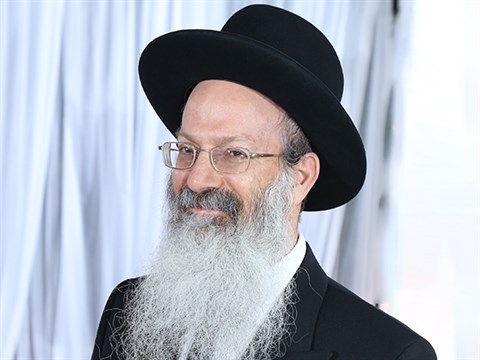
Rabbi Eliezer Melamed

Peninei Halakha 18. Torah Verses in the Prayers and in the Berakha of She-asa Li Kol Tzorki
Chapter 10: The Laws of Tisha Be-Av
The Laws of Purim 15. Scheduling the Se’uda when Purim is on Friday
Chapter 16: The Mitzvot of Joy and Kindness




Rabbis in Midrash
































Various Events FOR WHOM NOT TO VOTE
Rav Zvi Yehuda Kook stressed that Israeli politics is G-dly, so I have no problem answering this common question on a Torani blog. Also, Free-Will is a G-d-given right and obligation, to "destine one's fate" (R. Soloveichik, Kol Dodi Dofek, 67), so I obviously don't tell others how to vote. But once not a few (especially young) have already asked, a couple of personal words from experience and thoughts from chazal & Rav Kook which may be of help to others, mainly for whom NOT to vote.

P'ninat Mishpat Fallout from Failure to Install Elevator – part II
based on ruling 85007 of the Eretz Hemdah-Gazit Rabbinical Courts









