Yeshiva
Beit Midrash
- Shabbat and Holidays
- Hanukkah
- The Meaning of Hanukkah

The rabbis of the Talmud, commenting upon this difference between these two rabbinic holidays, explain that the holiday of Chanukah occurred on the basis of miracles that took place in the land of Israel, and, therefore, the recitation of Hallel is proper, while the miracle and salvation of the Jewish people which we commemorate on the day of Purim took place while the Jewish people already were in exile, and took place outside of the land of Israel.
At first glance, this appears to be a technical and superficial distinction. It represents a distinction between two sets of facts but does not explain the fundamental difference between them. In fact, one would be tempted to say that the miracle of Purim, because it did in fact take place outside the land of Israel in a foreign and hostile environment, should be reckoned as the greater miracle, and should merit more strongly the requirement of reciting Hallel on the day of its commemoration. Over the ages, we have accepted this distinction between the two holidays, but for many, the true difference has eluded our understanding.
As you can well imagine, the issue has been thoroughly discussed over the ages by the great rabbinic scholars and commentators. This distinction is especially difficult for us to reconcile with our limited human logic. We see both the Mishnah and Talmud strongly emphasize the holiday of Purim, which has an entire tractate of the Talmud devoted to it, while the holiday of Chanukah appears to have relatively little discussion.
It is not my purpose in this essay to discuss all the various ideas, insights, and comments that the great scholars of the Jewish people have opined on this subject over the ages. Suffice it to say, this matter has occupied much space, thought, and discussion. We can well understand why this would be the case, since we always strive to attain a deeper understanding and spiritual analysis of the special days in the Jewish calendar, and the lessons they come to teach us in each and every generation, in every situation and society.
It would be negligent on the part of all of us who celebrate these days not to have arrived at some sort of insight regarding the different modes of prayer on these different days and the miracles that the Lord performed for us.
My meager contribution this subject, I think, has a certain validity in our time. Living in the land of Israel means living in a constant moment of miracle. Even though we become accustomed to what we call "normal life" in this country, we are reminded every so often by events that the mere presence of the Jewish people in our ancient homeland is an historical miracle almost unparalleled in the annals of human history.
As such, we become what the rabbis called "accustomed to miracles." And, when a special miracle occurs, we would tend to ignore it, not recognize its validity, or not appreciate its import on all Jewish life for generations yet to come.
The miracle of Chanukah that took place in the land of Israel, has to be emphasized in order that the people would appreciate how extraordinary this special miracle was, and how necessary its occurrence was to Jewish survival and growth. Many times, miracles may go unnoticed simply because of the atmosphere of the miraculous which permeates the land of Israel.
Outside of the land of Israel, human beings always deem life to be normal, regular, and predictable. Even though this is never actually the case, we tend to think in those terms when living in the Diaspora. Because of that mindset, we are certainly aware of every miracle that occurs, even if it is, so to speak, relatively minor and hidden.
In the Diaspora, there is no necessity for us to recite Hallel to appreciate that a miracle occurred. I think that this is the essential difference between life in the land of Israel and life outside of the land of Israel.
Happy Chanukah
Shabbat shalom
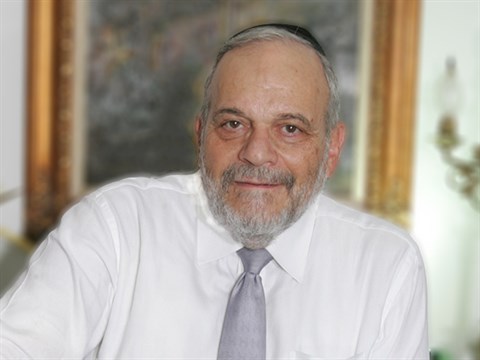
Berel Wein







Rabbis in Midrash























Lessons
fast navigation










Various Events FOR WHOM NOT TO VOTE
Rav Zvi Yehuda Kook stressed that Israeli politics is G-dly, so I have no problem answering this common question on a Torani blog. Also, Free-Will is a G-d-given right and obligation, to "destine one's fate" (R. Soloveichik, Kol Dodi Dofek, 67), so I obviously don't tell others how to vote. But once not a few (especially young) have already asked, a couple of personal words from experience and thoughts from chazal & Rav Kook which may be of help to others, mainly for whom NOT to vote.

P'ninat Mishpat Fallout from Failure to Install Elevator – part II
based on ruling 85007 of the Eretz Hemdah-Gazit Rabbinical Courts







