Yeshiva
Beit Midrash
- Torah Portion and Tanach
- D'varim
- Ki Tavo

Our Sedra contains a "pledge of allegiance" of its own. In a rather unusual ceremony, 6 of the Shvatim would stand on Har G’rizim (near Shechem) & 6 would stand on Har Eival below them in the valley. The leaders of the Levi’im would pronounce 12 blessings & curses – diverse Mitzvot between Man & G-d, Man & his fellow Man, legal & moral imperatives - & the tribes would respond with "Amen!" This was a kind of "rite of passage" - literally! - that accompanied our entrance into Israel, as we declared openly & publicly that Hashem & the Torah would be our primary guide & guidebook in the new land.
But this ceremony was essentially one-sided; Hashem (via the Levi’im) would tell us what was expected of us, & we would proclaim our assent. As Moshe declares in no uncertain terms: "You will listen to the voice of Hashem, & do all his Mitzvot & decrees." (27:10)
But there is another fascinating passage in the Sedra that is decidedly not one-sided, but rather a two-way street. Says the pasuk, "Et Hashem he’e’marta hayom lih’yot l’cha la’lokim…..v’Hashem he’e’mircha hayom lih’yot lo l’am segula – You have declared today that Hashem will be a G-d for you; and Hashem has declared today that you will be his most treasured nation."
This is a profound message most fitting for Elul – "Ani L’dodi, v’Dodi Li." G-d is telling us that we have a mutual pact & partnership between us; each of us has our own responsibilities & requirements. It is not a master-slave relationship, a "my way or the highway" arrangement. It is about respect & reverence that goes both ways.
One Rosh Hashana night, a Chasid had a dream in which G-d appeared to him. When he awoke, he ran to tell his Rebbe what happened. "Rather boldly," said the chasid, "I spoke out & said, ‘Hashem, it seems clear to me that as much as I need you, You need me! For without me & others like me, who would keep Your Mitzvot?! Who would study Your Torah?! Who would pray to You?! And so let’s make a deal; I will continue to follow Your ways, & You grant me & my family a New Year of Life & blessing.’
And you know what? G-d agreed to my proposal!"
The Rebbe grabbed his student by the collar & cried, "You fool! If you already had the Almighty exactly where you want Him, why didn’t you demand the Moshiach?!"
There is a time to be soft-spoken, & a time to be outspoken. This Rosh Hashana, let us pledge to keep our part of the bargain, & humbly request of G-d to keep His.
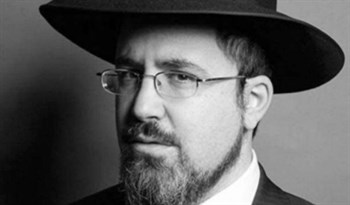
Rabbi Stewart Weiss
Was ordained at the Hebrew Theological College in Skokie, Illinois, and led congregations in Chicago and Dallas prior to making Aliyah in 1992. He directs the Jewish Outreach Center in Ra'anana, helping to facilitate the spiritual absorption of new olim.
Jewish Laws and Thoughts Shul “etiquette:” can we honor Hashem while respecting our fellow congregants?





Rabbis in Midrash























Lessons
fast navigation


Various Events FOR WHOM NOT TO VOTE
Rav Zvi Yehuda Kook stressed that Israeli politics is G-dly, so I have no problem answering this common question on a Torani blog. Also, Free-Will is a G-d-given right and obligation, to "destine one's fate" (R. Soloveichik, Kol Dodi Dofek, 67), so I obviously don't tell others how to vote. But once not a few (especially young) have already asked, a couple of personal words from experience and thoughts from chazal & Rav Kook which may be of help to others, mainly for whom NOT to vote.

P'ninat Mishpat Fallout from Failure to Install Elevator – part II
based on ruling 85007 of the Eretz Hemdah-Gazit Rabbinical Courts