Yeshiva
Beit Midrash
- Torah Portion and Tanach
- Shmot
- Tetzave

The Torah study is dedicatedin the memory of
Simha bat Hana
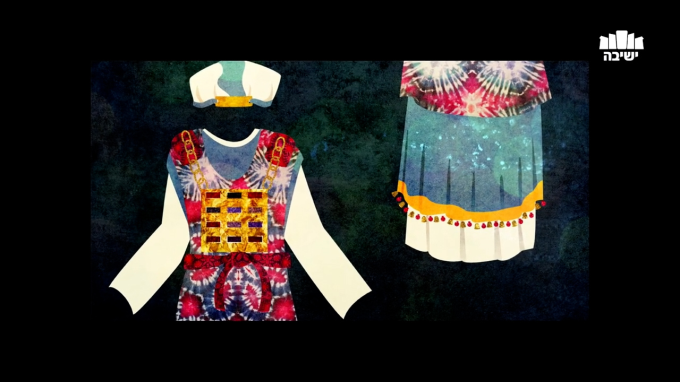
What made Aharon’s lack of jealousy so laudable that it warranted such a reward? Rav Neventzal, in his sichot, shows that even for a person of Aharon’s moral stature, erasing feelings of self-interest is special. When Moshe doubted Bnei Yisrael’s belief in redemption, Hashem took him to task, giving him (short-lived) leprosy (ibid.:16 & Shabbat 97a). Yet, when Moshe feared that Aharon would be jealous, he was reassured, not rebuked.We see, says R. Neventzal, that Moshe had reason to expect that Aharon would be somewhat sad when losing part of his stature. In truth, before dying, Aharon was rewarded to see his honor transferred to his son (Bamidbar 20:28), so some personal or family pride must have had a place in even his pure heart.
We should remember that even great people are human. Chazal’s comment that one should love Hashem with both inclinations, even the evil one (see Rashi on Devarim 6:4), applies even to the righteous. A person’s greatness is not to lack ambitions but to channel them to noble causes. Without ambitions, it would require superhuman strength of character to succeed. Hashem asks us to strive to be the best that we can humanly be, not to be angels. Aharon was the prototype of a rav who was similar to an angel (see Moed Kattan 17a). That is an achievement to be marveled at, not taken for granted. Aharon was deeply happy in his heart for Moshe not because he couldn’t care less if he (or his sons) would merit significant greatness, but because he trained himself to be happy for others, as well.
By saying that the choshen mishpat was a reward for Aharon’s unusual good-heartedness, we imply that someone else would otherwise have been Kohen Gadol. Indeed, Moshe was originally slated for the job but lost it to Aharon (Zevachim 102a). How hard it must have been to lose that sacred role! Actually, since Aharon showed his brother how to be fully happy in one’s heart for another’s gain, even at one’s own "expense," it was easier for Moshe to overcome the human tendency toward disappointment.
We should expect one who has been passed over for some important role or happy tiding to feel some pain, and we should be sensitive to it. Our Maker made us all human. We should appreciate when the slighted person deals with the situation maturely and positively. This will also make it easier for us to be fully happy for him when Divine Providence improves their lot.





Rabbis in Midrash























Lessons
fast navigation










Various Events FOR WHOM NOT TO VOTE
Rav Zvi Yehuda Kook stressed that Israeli politics is G-dly, so I have no problem answering this common question on a Torani blog. Also, Free-Will is a G-d-given right and obligation, to "destine one's fate" (R. Soloveichik, Kol Dodi Dofek, 67), so I obviously don't tell others how to vote. But once not a few (especially young) have already asked, a couple of personal words from experience and thoughts from chazal & Rav Kook which may be of help to others, mainly for whom NOT to vote.
P'ninat Mishpat Fallout from Failure to Install Elevator – part II
based on ruling 85007 of the Eretz Hemdah-Gazit Rabbinical Courts