Yeshiva
Beit Midrash
- Jewish Laws and Thoughts
- Torah Study
- Teachers and Students
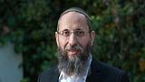
The Rav was a tremendously diligent Torah scholar, proficient in the whole Torah, in the entire Mishna and all the Rishonim; a proficiency possessed by only a few in this generation. I came to him many times with a matter in which he was not then involved, and it seemed as if he was now studying the matter in great detail.
The Rav possessed exalted attributes. He was tremendously humble, sensitive to mankind, with a keen perspective. The Rav would honor every person and give honor to Torah Greats, whoever and wherever they were.
In addition, the Rav dedicated his whole life to the service of G-d . In each and everything that he did, one could see how he was not thinking about himself or his honor, but was thinking about G-d’s honor!
To all this we need to add the Rav’s broad vision. Broad vision is not synonymous with openness. Broad vision means the ability to look at reality, at life – in its entirety within the context of a system of halachic considerations. This resulted in him sometimes being conservative and sometimes innovative, but always his motivating goal was: "that all your deeds should be for the sake of Heaven".
The Rav’s wide perspective was also manifested in his ability to view all the existing sides and possibilities.
Why didn’t the Rav eat the soup? The Rav utilized every minute for Torah study. I once sat with the Rav for a small meal with a few other donors, in a small room in the yeshiva. They served a tray of fish. The Rav ate, and all the other diners took after him. They served soup. The Rav didn’t eat. Everyone waited for the Rav to eat the soup but he did not. I handed the Rav soup, and he said: "I don’t eat soup on a weekday". I asked him to explain and he answered: "First, meals today are so fancy, that we have to leave something special for Shabbos. Second, it is such a waste of time to eat soup!".
Everyone in the Rav’s proximity was simultaneously in awe of him and loved him . In awe of the greatness: the knowledge that a person of extremely elevated stature walks among us, one of the leading rabbis of the generation, one with the highest spiritual pull saturated with fear of G-d, led to awe: "And they feared to approach him" (Exodus 34:30). On the other hand, the knowledge that in before us is a holy man who loves G-d with his whole being, who loves G-d and loves the creations, a humble man who desires the honor of every person – led immediately to great love! I was in awe of him, but I also loved him with a tremendous love, a boundless love, and I many times merited to also see his love for me.
Fear of Heaven – it was possible to see that G-d was found at the center of each and every one of his thoughts. The son of the Chafetz Chaim was once asked: "Can you give us an example from your father, the Chafetz Chaim, of ‘a tzaddik decrees and G-d fulfills’?" The son answered: "I don’t have examples of ‘a tzaddik decrees and G-d fulfills’, but I have many examples of ‘G-d decrees and a tzaddik fulfills’!". The Rav would act with absolute obligation to halacha (and he was very stringent in many halachot), and absolute obligation to G-d’s will in the world. Similarly, the biggest experience in the Rav’s world was "commanded and instructed"; the experience to obey G-d’s will!
Why was I not a doctor? While still in my youth, it was clear to me that I would go learn medicine (and to my father o.b.m. it was even clearer…). When I was in Shiur 5, the Rav called me to his room and spoke with me at length on the importance of learning medicine: "Medicine is a profession of kindness", he said, by way of a ruling. But afterwards he added: "But you need to remain in yeshiva. You need to continue in the world of Torah!". The Rav’s words slowly seeped into me. I stayed in the yeshiva for another year, I studied for the rabbinate, and in the end I stayed for many years afterwards. Later I merited to be summoned by our Rav to be a teacher in the yeshiva.
The Rav will be sorely missed. One of the leaders of the generation was taken to his final home. Great in Torah, great in attributes, great in humbleness and great in fear of Heaven. However, our master and teacher merited to teach many students, our master and teacher merited descendants who are busy with Torah in depth and with devotion, and our master and teacher merited that his writings and shiurim are in every place and website of Torah lovers. May it be His will that we merit to draw from our master and teacher the love of Torah and fear of Heaven, and to take even a little of his Torah and attributes.




Rabbis in Midrash























Lessons
fast navigation











Various Events FOR WHOM NOT TO VOTE
Rav Zvi Yehuda Kook stressed that Israeli politics is G-dly, so I have no problem answering this common question on a Torani blog. Also, Free-Will is a G-d-given right and obligation, to "destine one's fate" (R. Soloveichik, Kol Dodi Dofek, 67), so I obviously don't tell others how to vote. But once not a few (especially young) have already asked, a couple of personal words from experience and thoughts from chazal & Rav Kook which may be of help to others, mainly for whom NOT to vote.

P'ninat Mishpat Fallout from Failure to Install Elevator – part II
based on ruling 85007 of the Eretz Hemdah-Gazit Rabbinical Courts









