Yeshiva
Beit Midrash
- Torah Portion and Tanach
- Vayikra
- Achrei Mot
- Torah Portion and Tanach
- Vayikra
- Kdoshim

The beginning of our double-Parsha of Acharei Mot – Kedoshim is quite puzzling: Why does it begin by saying, "Hashem spoke to Moshe," but never tells us what He said? And why does it say TWICE that Ahron’s sons died?
To try to solve this puzzle, we must try to understand why Nadav & Avihu perished. Contrary to popular opinion, they were not "sinners." While they did indeed commit a sin, they were, in actuality, righteous in the extreme. In fact, even Moshe says to his brother Ahron: "They were greater than you or I!" So what, exactly, was their sin?
Our opening pasuk hints to it: "They came close - too close, in fact – to Hashem," & so they got burned. They wanted so desperately to approach G-d that they "crossed the line" & went where no human, no matter how well-intentioned, should go. And so (according to various opinions) they added to the mandated offering; they brought it before its proper time; they became intoxicated; they had no children. All these indicate their overwhelming zeal to serve G-d, even at the cost of going beyond His dictates, & abandoning normal lives.
And so Rav Moshe Feinstein explains: Ahron was stunned into silence upon hearing of their death, as he experienced two, conflicting emotions: Tragedy at the loss of his sons, & great joy, knowing that they were tzadikim who would enjoy Heaven’s highest reward.
Now we can answer our initial questions. After the shock of Nadav & Avihu’s death – which came right in the midst of celebrating the Mishkan’s inauguration – Hashem "speaks" to Moshe. What, if anything, He said was actually irrelevant. G-d just wanted Moshe to know that He was still with us, that He still loved us & would not "turn His back" on us. Yes, these sons were dead – that fact is repeated to acknowledge the scope of the tragedy – but life & the Jewish People would still go on, despite the tears.
The message of all this hits home: We have now concluded this year’s commemoration of the monumentally sad "twin tragedies" of modern Israel, the death of the 6+ million in the Shoa, & the 22,320 fallen soldiers of the IDF who died Al Kiddush Hashem. We are terribly sad. But, despite our sadness, we know that Hashem still speaks to us, He still watches over us & loves us. He has not deserted us, & never will.
Acharei Mot Kedoshim, literally, "after the death of the holy," we will still move forward, devoted partners with the Divine in our march
towards Geula Shlema. – may it come soon.

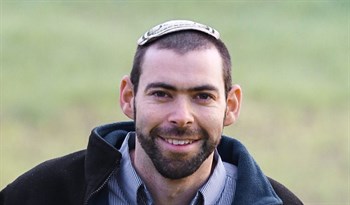





Rabbis in Midrash























Lessons
fast navigation











Various Events FOR WHOM NOT TO VOTE
Rav Zvi Yehuda Kook stressed that Israeli politics is G-dly, so I have no problem answering this common question on a Torani blog. Also, Free-Will is a G-d-given right and obligation, to "destine one's fate" (R. Soloveichik, Kol Dodi Dofek, 67), so I obviously don't tell others how to vote. But once not a few (especially young) have already asked, a couple of personal words from experience and thoughts from chazal & Rav Kook which may be of help to others, mainly for whom NOT to vote.

P'ninat Mishpat Fallout from Failure to Install Elevator – part II
based on ruling 85007 of the Eretz Hemdah-Gazit Rabbinical Courts