Yeshiva
Beit Midrash
- Torah Portion and Tanach
- Bamidbar
- Korach

"Why should any one family dominate the leadership? We’re all holy in the eyes of the Almighty - so let’s ‘share the wealth’ & spread the power – vote for me!"
Korach buttresses his campaign by declaring, "u’v’tocham Hashem!" – G-d is "in them." In other words, the spirit of Hashem inhabits & animates every single person.
These are high-minded & actually quite wholesome statements. We certainly DO believe that the spirit of Hashem ("tzelem or ruach Elokim") resides within each of us, & we all have the potential to be a Moshe. But there is a huge difference between the potential & the actual.
Korach had a variety of very significant gifts: He was immensely wealthy, with riches beyond compare, & came from the noblest of Jewish families; he was intelligent & passionate, with an excellent gift for gab. But for all that, he lacked one extremely crucial quality: Self-sacrifice.
Just consider, on the other hand, what Moshe went through on behalf of his people: He gave up the rich, cushy life of the palace to cast his lot with his brothers. He killed the Egyptian, which resulted in a price being put on his head, thus necessitating his fleeing to Midian for 60 years, during which he did not see his biological family. He returned to confront Paro, risking his life in the process. He separated from his wife, so as to be "on call" whenever needed. And he put up with all the demands, complaints, criticism & rebellion from Bnei Yisrael - & we know how frustrating THAT can be for any Jewish professional!
True leadership isn’t about perks & privileges, kavod & kehuna. To be a real leader is to agonize & empathize, to work & worry on behalf of others, to sweat & to suffer.
Just look at the ultimate fate of so many great leaders of history – from Moshe to Mahatma; from Yakov to Yirmiyahu to Lincoln to Begin. They literally gave their lives for the masses, hardly knowing a moment’s peace. It was this very lack of luxury, says Rav Soloveitchik, which proved their worth & guaranteed their legacy.
Korach did not grasp that while leadership may not be an exclusive club, you can’t get in without paying the dues.






Rabbis in Midrash























Lessons
fast navigation







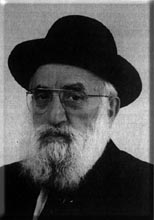

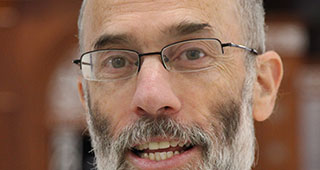

Hosha'ana Rabba FLYDUBAI & HOSHANA RABBA- ANI VAHU HOSHIA NA- I & HIM SAVE US
"Ani vaHu Hoshia Na", "I and Him, Save Us". We don't just pray to Him, but we also pray to and for ourselves that we should emulate and educate our children to have that instinctive altruism with which He created the world. President Trump seemed amused about Yaniv Hayon, our PLUMBER who confidently worked with G-d like Superman (he learned from a pilot on a TV show!) to save 174 lives on the Dubai hijacking, but we in Israel are totally accustomed already 78 years to our plumbers, teachers, garbage-men, rabbis, farmers & doctors being Hashem's shlichim! This is what Zionism is about.
Moreshet Shaul Hashem Is your Shadow – part I
Based on Siach Shaul, Pirkei Machshava V’Hadracha p. 420 – an address from 1941

P'ninat Mishpat A Non-Contractor in Changing Times – part I
(based on ruling 85128 of the Eretz Hemdah-Gazit Rabbinical Courts)
Moreshet Shaul Our King on Rosh Hashana, Our Father on Yom Kippur.
Based on Aroch Siach, p. 221 (Rav Shaul Yisraeli)







