Yeshiva
Beit Midrash
- Torah Portion and Tanach
- Bereshit
- Vayishlach

The Torah study is dedicatedin the memory of
Amram son of Sultana
"Let me leave!" said [the stranger]. "Dawn is breaking."
"I will not let you leave unless you bless me."
"What is your name?"
"Jacob"
"Your name will no longer be said to be Jacob, but Israel ("Yisra'el"). You have become great before God and man. You have won" (Genesis 32:24-29).
The above verses allude to the nature of the relationship between the Jewish people and the nations of the world throughout history. "The actions of the fathers," say the Sages of Israel, "are an indication of what will befall the children."
This world is likened to night. The future redemption will be like the break of dawn and the first rays of morning sun. For many a night-like generation, the ongoing struggle between the Jewish people and the nations of the world has persisted. The Jewish people stand apart - "A nation that dwells alone" (Numbers 23:9), just as Jacob remained alone. The Nation of Israel follows its own unique itinerary, guided by an unswerving faith in the one true God, while the rest of the nations attempt, albeit unsuccessfully, to defeat them.
The success of the nations finds expression in the dislocation of the hip joint. They succeed only in causing the Jewish people to limp. Yet, though they succeed in slowing down the pace of our advance toward the final redemption, they are unable to stop Israel entirely.
The Jewish people are advancing slowly, limping toward the imminent redemption. When it arrives, like the "break of day", all of the nations will admit to the truth of our convictions, and will bless us. Daybreak will arrive and heal us, as it is written, "But unto you that fear My name shall the sun of righteousness arise with healing in its wings" (Malakhi 3:20).
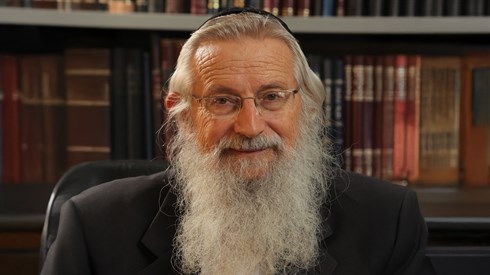

Vayishlach Did Yaakov Avinu bensch gomeil after surviving his encounter with Eisav?
More about Birkas Hagomeil





Rabbis in Midrash























Lessons
fast navigation









Various Events FOR WHOM NOT TO VOTE
Rav Zvi Yehuda Kook stressed that Israeli politics is G-dly, so I have no problem answering this common question on a Torani blog. Also, Free-Will is a G-d-given right and obligation, to "destine one's fate" (R. Soloveichik, Kol Dodi Dofek, 67), so I obviously don't tell others how to vote. But once not a few (especially young) have already asked, a couple of personal words from experience and thoughts from chazal & Rav Kook which may be of help to others, mainly for whom NOT to vote.

P'ninat Mishpat Fallout from Failure to Install Elevator – part II
based on ruling 85007 of the Eretz Hemdah-Gazit Rabbinical Courts








