Yeshiva
Beit Midrash
- Sections
- Chemdat Yamim
- Ein Ayah

One who finds sha’atnez in his clothing should remove the clothing even in the market place. What is the reason? "There is no knowledge and no wisdom and no ideas against Hashem" (Mishlei 21:30). Wherever there is a desecration of Hashem’s name, we do not give honor to the master.
Ein Ayah: Mefursamot (matters of intuitive proper behavior) should be adhered to in order to distinguish between good and bad. However, we should entrench in our minds that they are of a lower level than true muskalot (matters of ethics that need to be acquired cognitively), as the Rambam says (Moreh Nevuchim 1:2). From the knowledge of good and evil in the sphere of mefursamot comes the recognition of the pleasing and the improper. [To go from the level of sensitivity of muskalot to that of mefursamot] is what happened to Adam and Chava when they ate from the Tree of Knowledge and "knew that they were naked" (Bereishit 3:7). Therefore, the laws of Hashem’s perfect Torah, which were built on the purity of the Divine muskal, are higher than all of the rules of the mefursamot of good and bad, which include the matter of kavod haberiot (human dignity).
For this reason, when mefursamot clash with Hashem by requiring one to violate a Torah law, we are instructed: "There is no knowledge and no wisdom and no ideas against Hashem." This is so even though mefursamot do exist and should be followed when they do not contradict Torah laws.
We should also point out that there are two types of laws. There are some laws whose purpose focuses only on the pleasing and the improper in order to broaden a person’s heart and raise his spirit by recognizing that which is pleasant and elevated and to make his talents more delicate. Included in this are matters of aesthetics. Certain areas of wisdom are not included, such as music and various forms of art. They have their own rules of culture that are arranged based on intellect. The goals of all of these fields of endeavor are not about matters that give man life, not temporary life in this world, and certainly not eternal life in the world to come. Therefore, it is proper to check all of their particular applications and origins so that nothing should go beyond the boundaries of good taste and dignity. After all, their entire purpose is to promote good taste and dignity, and thus the means by which they are obtained should not impinge on the greater goal.
There is another set of rules that have to do with life in its most fundamental basis. Regarding the rules of medicine and wellness, one should not set out to consider whether they impinge upon matters of manners and dignity. This is because their goal is of a lofty level of importance; they are encompassing, necessary, and bring completeness in a way that matters of dignity, which are extras that make things more pleasant, are not.
The laws of the Torah should be recognized as life-giving laws and not just as adding to the physical or spiritual quality of life. Rather they are needed to acquire life, both eternally and immediately; therefore, they exceed any accepted element of honor and grandeur. Consequently, wherever there is a desecration of Hashem’s name and a disregard for His Torah, which is a Torah of life, we do not give respect to the master, as things that give eternal life exceed any humanly accepted matter of honor.
P’sukim compare the Torah to medicine, as it says: "I am Hashem your healer" (Shemot 16:26); "It [the Torah] will be medicinal for your navel" (Mishlei 3:8); "as I cure Israel, and the sin of Ephrayim will be exposed" (Hoshea 7:1). Regarding the last pasuk, it is undignified to reveal sin; however, whenever there is a medical need to do so, a doctor must disregard dignity and manners. Therefore, Hashem felt it necessary to reveal the sin of Ephrayim, as He was only concerned that salvation will come to those who need healing.
Various Rabbis
Various Rabbis including those of of Yeshivat Bet El, such as Rabbi Chaim Katz, Rabbi Binyamin Bamberger and Rabbi Yitzchak Greenblat and others.
Moreshet Shaul Moreshet Shaul: A Crown and its Scepter – part II
Based on Siach Shaul, Pirkei Machshava V’Hadracha p. 294-5

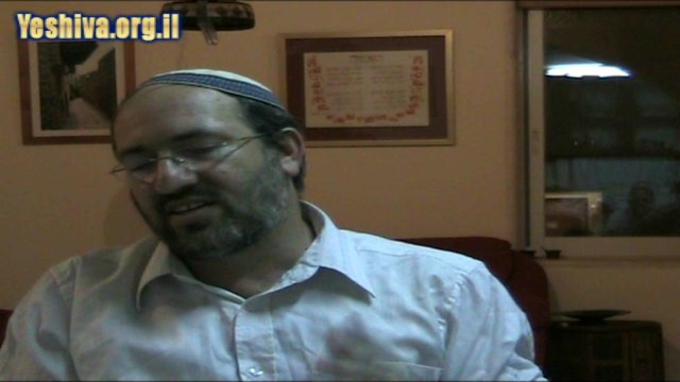

Rabbis in Midrash























Lessons
fast navigation











Various Events FOR WHOM NOT TO VOTE
Rav Zvi Yehuda Kook stressed that Israeli politics is G-dly, so I have no problem answering this common question on a Torani blog. Also, Free-Will is a G-d-given right and obligation, to "destine one's fate" (R. Soloveichik, Kol Dodi Dofek, 67), so I obviously don't tell others how to vote. But once not a few (especially young) have already asked, a couple of personal words from experience and thoughts from chazal & Rav Kook which may be of help to others, mainly for whom NOT to vote.
P'ninat Mishpat Fallout from Failure to Install Elevator – part II
based on ruling 85007 of the Eretz Hemdah-Gazit Rabbinical Courts












