Yeshiva
Beit Midrash
- Jewish Laws and Thoughts
- Jewish Thought
- Foundations of Faith

The Torah study is dedicatedto the full recovery of
Asher Ishaayahu Ben Rivka
What makes the Jewish people different from other nations is not the fact that they possess a different worldview, faith, or law; rather, the Jews boast an essentially different nature and being - a divine soul. This nature does not lend itself to change in the slightest. It is part of the very makeup of the Jew, and it is as impossible to uproot as it is to acquire. This natural status is not the result of choice or decision. A Jew remains forever Jewish. In the words of the Sages, "A Jew who sins continues to be Jewish."
I am quite aware that the above position gives rise to strong objection by those who do not believe in the Torah. Yet, there can be no hiding or denying this fundamental fact, the truth of which is acknowledged by all people of faith. All who believe in the Torah of Israel must also accept the uniqueness of Israel, for this is a concept which permeates the entire Torah.
The Torah tells us that God spoke to Abraham, saying, "Go away from your land, and from your place of birth, to the land that I will show you." (Genesis 12:1) This is the first time that God speaks with Abraham. The Torah makes no effort to inform us, as it does in the case of Noah, that Abraham was righteous and God-fearing. Regarding Noah it is written: "Noah was a righteous man, faultless in his generation...and God said to Noah..." (Genesis 6:9,13). Because he was righteous, God spoke with Noah. Yet, why are we not told that Abraham was righteous prior to God’s speaking to him? This omission comes to teach us that God's choosing Abraham was not because of his good deeds; rather, it was Divinely and absolutely decreed. Hence, even if the deeds change, the choice does not. This concept is also given voice in the wording of the blessing over the Torah: "...who chose us among all the nations, and gave us His Torah." We do not say that God gave us His Torah, and as a result chose us from among all of the nations, but that He "chose us among all of the nations," and, as a result, "gave us His Torah." The festival liturgy too reads, "You chose us from among all of the nations, you loved us, and desired us..."
Foundations of Faith (51)
Rabbi Zalman Baruch Melamed
9 - 9. The Unique Status of the Jewish People
10 - 10. Israel's Uniqueness
11 - 11. Creation and History in the Torah
Load More
No doubt there is a connection between Israel's chosen status and the fulfillment of Torah. It is not enough to for a Jew to be satisfied with the fact that, "You chose us." One must uphold the Torah and fulfill the commandments in their entirety. This goes without saying. What needs to be stressed is the fact that the Jews are a unique and lofty people, both in the very essence of their being and by virtue of the fact that they received the Torah. These are two distinct and interrelated qualities. In the language of the Sages, "Israel and the Torah are one."
Here, then, we have an answer to the question, "How is it that the Almighty, who created the entire universe and all human beings, gave the Torah to the Jews alone? Why did God not command all humans to behave according to the Torah? Are not all humans His handiwork?" The answer is that there is simply no room for comparison. The Jewish people are different and unique, and what is good for them is not necessarily good for everybody. God's Torah is designed for God's nation. I am aware that this fundamental truth gives rise to many questions. For example: What, then, in the eyes of the Torah, is the role of the other nations? What sort of relations should be maintained between the Jews and the non-Jewish world? And while questions that trouble people certainly demand answers, the axiomatic principle which we have spoken of here cannot be denied. Indeed, all authorities of Jewish thought agree upon it. The Jewish people are the Chosen People, and there are answers to the questions which arise from this principle. We hope to address these too in due time.
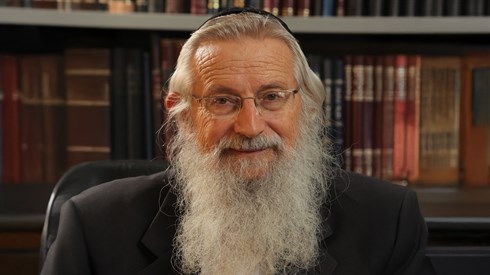





Rabbis in Midrash























Lessons
fast navigation









Various Events FOR WHOM NOT TO VOTE
Rav Zvi Yehuda Kook stressed that Israeli politics is G-dly, so I have no problem answering this common question on a Torani blog. Also, Free-Will is a G-d-given right and obligation, to "destine one's fate" (R. Soloveichik, Kol Dodi Dofek, 67), so I obviously don't tell others how to vote. But once not a few (especially young) have already asked, a couple of personal words from experience and thoughts from chazal & Rav Kook which may be of help to others, mainly for whom NOT to vote.

P'ninat Mishpat Fallout from Failure to Install Elevator – part II
based on ruling 85007 of the Eretz Hemdah-Gazit Rabbinical Courts









