Yeshiva
Beit Midrash
- Torah Portion and Tanach
- Bamidbar
- Korach
- Sections
- Chemdat Yamim
- Parashat Hashavua

The gemara (Makkot 23b) says that ruach hakodesh (Divine Spirit) appeared in three courts: that of Shem, Shmuel, and Shlomo. Tamar’s claim that she was pregnant from Yehuda, when she could have had other partners, was supported by a Heavenly voice. When Shmuel challenged all to attest to misappropriations he might have committed, such a voice said "I am a witness that you did no wrong." When Shlomo proved psychologically who the live baby’s mother was, it was Divinely corroborated.
All three stories involve siyata dishmaya in national leadership. From Yehuda and Tamar came the dynasty of King David, our eternal leaders. Shmuel carried out Yaakov’s prophecy that the leadership comes from the tribe of Yehuda. Shlomo’s judgment cemented his hold on the throne, enabling the Davidic dynasty to be the first to establish a second generation of accepted leadership. How does one achieve that goal?
The midrash (Tanchuma, Korach 1) relates to Korach a pasuk in Mishlei (18:19) that talks of one who rebelled from kiryat oz and lost his honor. The Sefat Emet explains what kiryat oz is. He says that it is Bnei Yisrael’s wholeness and broadness in accepting the Torah. The Torah is called oz (strength), as it says, "Hashem, shall give oz to his nation; Hashem shall bless His nation with shalom" (Tehillim 29:11). He continues that, in general, in this world, there is a lack of completeness, and it is necessary to have siyata dishmaya. Let us explain what the Sefat Emet meant.
Korach saw himself as the height of completeness, and thus rebelled against Moshe, who championed the belief that one can reach completeness only through the Torah. When Korach said, "For the entire nation is holy," he showed a lack of understanding that a group of people is always lacking without siyata dishmaya. Moshe’s combination of strong leadership and humility provided the proper lesson for generations. One always needs siyata dishmaya, although one cannot be assured how it will appear.
Let us conclude, along the lines of the Sefat Emet, that shleimut, related to shalom, can come only when the Torah takes into consideration the spiritual needs of the nation as a whole. Sometimes, public needs justify stringent rulings and sometimes lenient ones. However, only when these needs are addressed does one use the Torah of shleimut and the leadership merits siyata dishmaya - in the community’s merit.
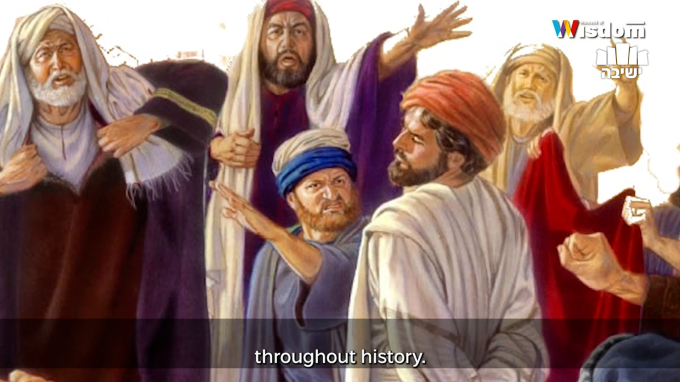








Rabbis in Midrash























Lessons
fast navigation











Hosha'ana Rabba FLYDUBAI & HOSHANA RABBA- ANI VAHU HOSHIA NA- I & HIM SAVE US
"Ani vaHu Hoshia Na", "I and Him, Save Us". We don't just pray to Him, but we also pray to and for ourselves that we should emulate and educate our children to have that instinctive altruism with which He created the world. President Trump seemed amused about Yaniv Hayon, our PLUMBER who confidently worked with G-d like Superman (he learned from a pilot on a TV show!) to save 174 lives on the Dubai hijacking, but we in Israel are totally accustomed already 78 years to our plumbers, teachers, garbage-men, rabbis, farmers & doctors being Hashem's shlichim! This is what Zionism is about.











